
The fastest way to lower an electric bill is to go after the biggest line item first. Nationally that is air conditioning, which the EIA puts at 19% of residential site electricity (2020), followed by space heating and water heating at 12% each. Together those three account for roughly 43% of household electricity, so a 10% cut there beats a 50% cut on something that is 2% of the bill. With the average US residential rate at 18.31¢ per kWh (EIA, July 2026) and up about 5% in a year, it is worth ranking the fixes by payoff rather than doing them in the order the internet suggests. Here is the list, with the source and the math for each.
Step Zero: Find Out What Your Bill Is Made Of
Two numbers decide everything: kilowatt-hours used and the price per kWh. Divide your bill total by the kWh on it to get your all-in rate, then compare it with your state’s average in our electric bill by state table. If the rate is at or below average but the kWh are high, the fixes below are the answer. If the kWh are normal and the bill is still high, check the rate plan, a fixed charge or a recent rate change, and our guide on why electric bills are so high covers what moved prices this year.
Our arithmetic for scale: the EIA reports an average US household buys about 899 kWh a month (2022 data). At 18.31¢ that is about $165 a month, so every 1% off the whole bill is worth about $1.65 a month.
The Nine Fixes, Ranked
| Rank | Fix | Source for the savings claim | Typical cost |
|---|---|---|---|
| 1 | Seal air leaks and add attic insulation | ENERGY STAR: average 15% off heating and cooling costs, 11% off total energy costs | $ to $$$ |
| 2 | Set the thermostat back when asleep or away | DOE Energy Saver: as much as 10% a year for 7-10°F for 8 hours a day | Free |
| 3 | Smart or programmable thermostat | ENERGY STAR: about 8% of heating and cooling bills on average for certified models | $ |
| 4 | Replace a worn room AC with an ENERGY STAR model | DOE FEMP: 612 vs 826 kWh a year for a 12,000 Btu/h unit | $$ |
| 5 | Switch to a heat pump or mini-split where it fits | ENERGY STAR: ducts can waste over 30% of space-conditioning energy | $$$ |
| 6 | Swap incandescent bulbs for LEDs | ENERGY STAR: at least 75% less energy | $ |
| 7 | Cut always-on (standby) loads | NRDC: about $165 per household a year | Free to $ |
| 8 | Shift flexible loads off peak (time-of-use plan) | Depends on your utility’s rate spread | Free |
| 9 | Shop your supplier (deregulated states only) | Depends on offers in your area | Free |
Ranks reflect typical payoff for a home with central cooling. A home with electric resistance heating should move heating and insulation to the top.
1. Seal and Insulate: The Fix That Keeps Paying
ENERGY STAR estimates that air sealing a home and adding insulation in attics, floors over crawl spaces and accessible basement rim joists saves an average of 15% on heating and cooling costs, or 11% on total energy costs. That figure comes from energy modeling of typical existing homes, so a leaky house with thin attic insulation will do better and a tight one will do worse.
Our arithmetic: if heating and cooling is $80 of a monthly electric bill, 15% is $12 a month, or $144 a year, every year. See what attic insulation costs to decide whether the payback fits your house.
2 and 3. Thermostat Setback and Smart Thermostats
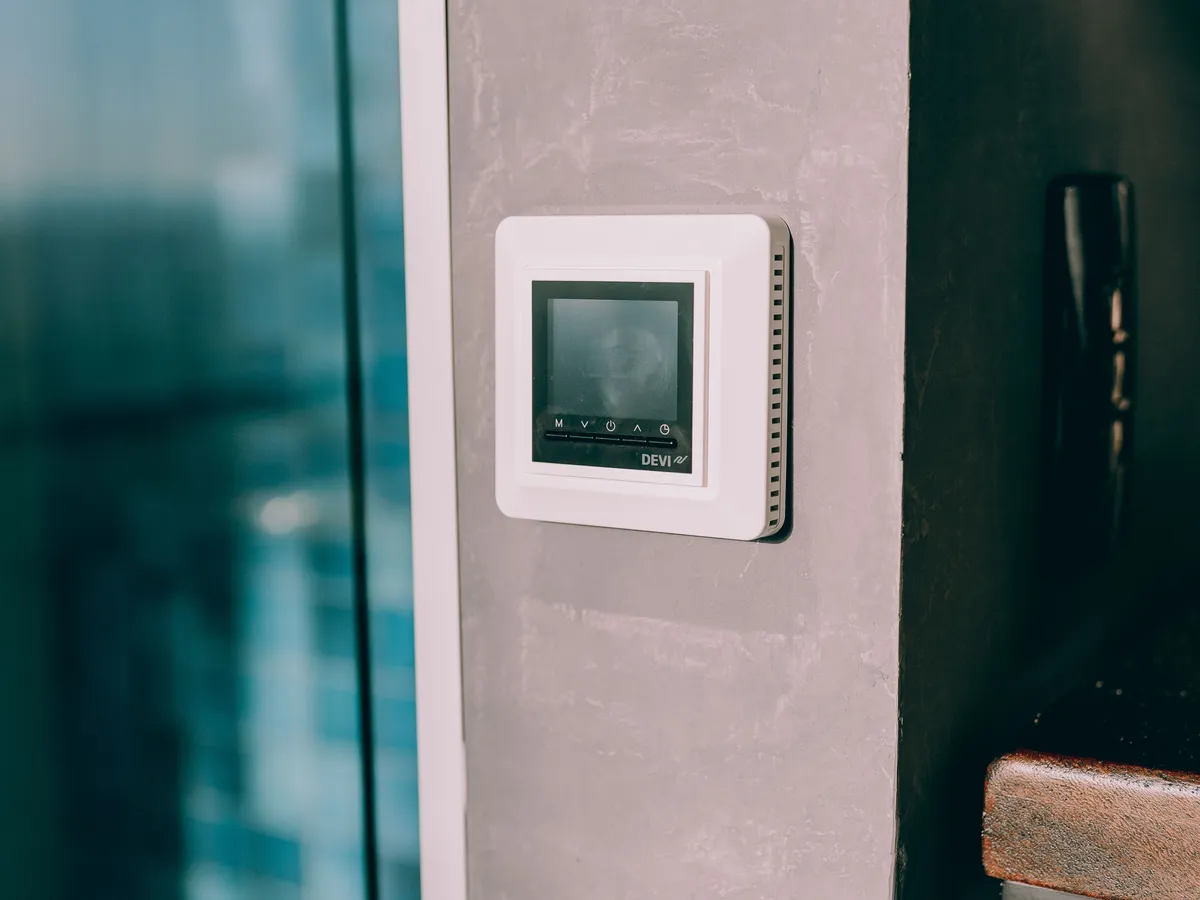
The DOE’s Energy Saver guidance says you can save as much as 10% a year on heating and cooling by turning the thermostat back 7 to 10 degrees Fahrenheit for 8 hours a day from its normal setting, and that the percentage saved is larger in milder climates. That costs nothing if you do it by hand. ENERGY STAR says certified smart thermostats save about 8% of heating and cooling bills on average, with more savings possible depending on climate and habits. The honest comparison is that a smart thermostat mostly automates the setback you could do manually, so it pays only if you would not otherwise do it. Our smart thermostat savings guide has the payback math.

4 and 5. Replace the Big Cooling and Heating Hardware
The DOE’s Federal Energy Management Program compares a 12,000 Btu/h room air conditioner that meets ENERGY STAR (14.7 CEER) with a less efficient one (10.9 CEER) at 750 operating hours a year. The ENERGY STAR unit uses 612 kWh a year versus 826 kWh. At 18.31¢ that is about $112 versus $151 a year, a saving of about $39 (our arithmetic, repricing DOE’s kWh at the 2026 average). Over a nine-year life the gap compounds, but the saving is modest next to the purchase price, so replace a working unit only if it is old and failing.
For whole-house cooling and heating, ENERGY STAR notes that duct losses can account for more than 30% of a home’s space-conditioning energy, and ductless mini-splits avoid them. That is the case for mini-split versus central air, and for running the heat pump payback calculator before a big purchase. Hot-water heating, the other 12% line, is covered in our water heater replacement guide.
6. LEDs: Cheap, but Smaller Than Their Reputation
ENERGY STAR certified LED bulbs use at least 75% less energy than incandescent bulbs. An illustration with assumptions stated (our arithmetic): swapping ten 60 W incandescent bulbs for 9 W LEDs that each run 3 hours a day saves 51 W × 10 bulbs × 3 hours × 365 days, which is about 558 kWh a year, or about $102 at 18.31¢. Lighting is a small share of the bill for most homes, so the swap is a cheap, certain win and not a transformation.
7. Always-On Devices
The NRDC’s 2015 Home Idle Load study, which analyzed smart-meter data from about 70,000 northern California homes, estimated that always-on but inactive devices cost the average US household about $165 a year at the 12.5¢ national rate then. At 2026 prices the same load costs more. Set-top boxes, old TVs, modems, game consoles on instant-on and a forgotten second refrigerator are typical sources. We break down the numbers in the standby power guide.
8 and 9. Rate Plan and Supplier
If your utility offers time-of-use pricing, moving dishwashing, laundry, pool pumps and EV charging to off-peak hours can lower the cost of the same kilowatt-hours; the EV home charging guide shows the math for the largest flexible load. In deregulated states you can also compare retail suppliers for the generation part of your bill. Neither has a fixed national savings figure, so price your own usage against the actual offer.
What Not to Bother With
Space heaters deserve a warning, not a place on this list: a 1,500 W heater costs about 27¢ an hour at the national average, and unless it lets you turn the central heat down it adds to the bill. We cost it out in the space heater guide. Likewise, buying new windows purely for the electric bill rarely pays back quickly; see new windows energy savings before you spend.
The Bottom Line
Start with the lines that make up most of the bill: cooling, heating and water heating at roughly 43% of household electricity. Seal and insulate for the largest verified average savings (15% of heating and cooling, per ENERGY STAR), set the thermostat back for free savings of up to 10%, then work down to LEDs, standby loads and your rate plan. Each fix is modest alone, but together they can take a meaningful bite out of a $165 monthly average.
FAQ
What is the fastest way to lower my electric bill?
Raise the cooling thermostat or lower the heating one by a few degrees when you are asleep or away. The DOE says turning the thermostat back 7-10°F for 8 hours a day can save as much as 10% a year on heating and cooling, and it costs nothing.
What uses the most electricity in a home?
According to the EIA, air conditioning at 19% of residential site electricity (2020), then space heating and water heating at 12% each. Lighting and refrigeration follow.
Do smart plugs and power strips really save money?
They save money only where they switch off a device that would otherwise draw power all day. The NRDC found the average US household’s always-on load costs about $165 a year, so a few targeted power strips on TV and computer setups can pay back quickly.
How much can I save by sealing my house?
ENERGY STAR’s modeled average is 15% off heating and cooling costs and 11% off total energy costs for air sealing plus added insulation. Your result depends on how leaky and under-insulated the house is to start with.
Is switching electricity suppliers worth it?
Only in states with retail choice, and only if the total price per kWh, including fees, is lower for your usage. Compare the all-in rate, not the headline rate, and check the contract term and exit fee.