
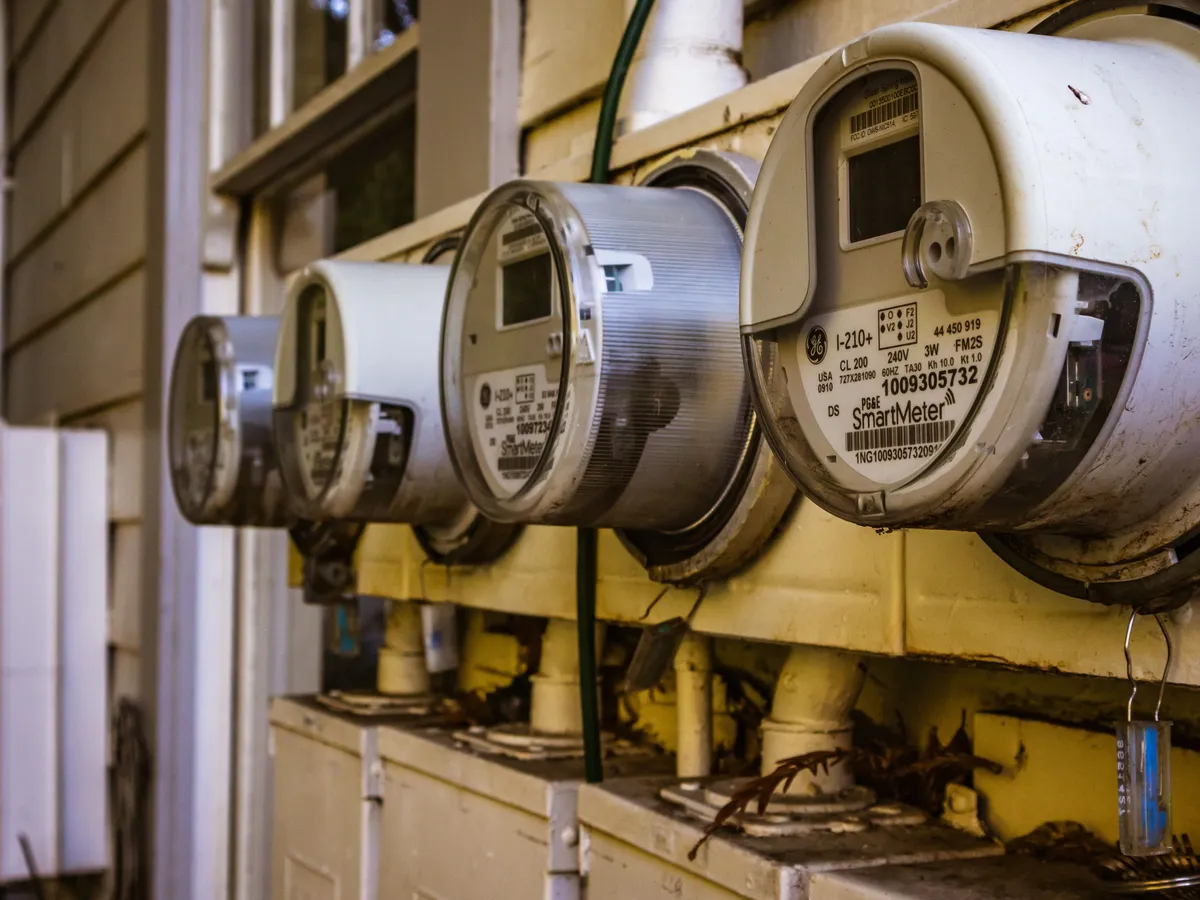
Residential electricity in the US averaged 18.31¢ per kWh in July 2026, up 4.9% from a year earlier (EIA). On a household that uses 900 kWh a month (our assumption), that rise adds about $7.74 a month, or roughly $93 a year (our arithmetic, using July 2025’s 17.45¢ rate). Data centers are a big reason demand is growing and a likely contributor to higher costs in some regions, but the research on how much they raise your own bill is mixed, and your state’s utility rules matter more than the headline. Here is what is verified, what is still argued over, and what to do about your bill this winter.
What Your Rate Is Doing
Three official measures, from two agencies, all point the same way:
| Measure | Latest figure | Source |
|---|---|---|
| Residential price, July 2026 | 18.31¢ per kWh, up 4.9% on a year earlier | EIA Electric Power Monthly |
| Forecast residential price, 2026 average | 18.2¢, a nearly 5% rise from 2025 | EIA, as reported by Utility Dive |
| Forecast growth in 2027 | about 2% | EIA, as reported by Utility Dive |
| Electricity index, 12 months to August 2026 | up 3.8% | BLS Consumer Price Index |
| BLS average price, August 2026 | 19.6¢ per kWh versus 19.0¢ a year earlier (3.2% higher) | BLS average price data |
The BLS and EIA numbers differ because they are different measurements, so treat them as two readings of the same trend. For comparison, the BLS all-items index rose 3.4% over the 12 months to August, so electricity is rising faster than prices overall on both measures. The BLS also reported that the electricity index fell 0.2% in August alone, so the climb is not every month.
If you want to see which state you are in, our electric bill guide covers the range, which in July ran from under 13¢ to 48¢ per kWh.
Where Data Centers Come In
EIA’s forecasts, as reported by Utility Dive, show commercial electricity sales growing 2.2% to about 1,530 billion kWh in 2026, roughly equal to the residential sector, then 5.3% in 2027, when commercial use is expected to pass residential use for the first time. EIA attributes the growth to hyperscalers, bitcoin miners and cloud computing. Residential sales are forecast to grow only about 0.5% a year.
EIA’s March 12, 2026 analysis puts national load growth at 1.9% in 2026 and 2.5% in 2027, compared with 1.7% a year since 2020 and 0.1% a year from 2005 to 2019. In the two regions with the most data center development, ERCOT in Texas and PJM in the mid-Atlantic and Midwest, forecast annual load growth averaged 10% and 3% between 2025 and 2027.
The clearest cost signal: PJM capacity
PJM is the grid operator for much of the mid-Atlantic and Midwest. Its July 14, 2026 auction for the 2028/2029 delivery year cleared at $325 per megawatt-day and still fell 6,831 MW short of PJM’s reliability requirement. PJM said the results show “demand for electricity continues to grow faster than electricity supply,” and noted the continued addition of large data center loads to its forecast. What this means for you: those capacity charges flow into supply costs on bills in the region, though the share a household pays depends on its utility and how it buys power.
Do Data Centers Make Your Bill Higher? The Evidence Is Split
Honest answer: it depends on who pays for the grid they need. Columbia University’s Center on Global Energy Policy reviewed the research and found the effect is complex and context-dependent:
- They can lower rates. More load spreads fixed grid costs across more kilowatt-hours. One analysis cited in the review estimated that every 1 GW of new data center load could reduce average household bills at PG&E by 1% to 2%.
- They can raise local prices. The review cites research that proximity to data centers is associated with local marginal price increases of up to 20%, because transmission is constrained.
- Cost allocation decides it. The benefits require regulators to make large customers pay up front for their own grid upgrades instead of spreading the cost across everyone.
So the fair summary is that data centers have not been proven to raise every household’s bill, and in the wrong rate design they can. That is why Congress took it up. The House passed the Ratepayer Protection Act 417 to 3 on September 16, 2026. It asks states to consider standards so that loads above 100 MW pay the full incremental cost of the infrastructure they need. The Senate has not acted, and it may not become law.
What a Small Increase Costs You
At the current rate your bill moves slowly, but it adds up. Our arithmetic, assuming 900 kWh a month:
| Rate change | Added cost per month | Added cost per year |
|---|---|---|
| July 2025 to July 2026 (17.45¢ to 18.31¢) | $7.74 | $93 |
| 2% rise in 2027 (about 0.36¢ on 18.2¢) | $3.28 | $39 |
| Every 1¢ of rate increase | $9.00 | $108 |
Your own usage may be far different; electric-heat and heat pump homes use much more in winter. For the winter side, see our winter heating cost guide and the space heater cost guide.
How to Spend Less
You cannot change your utility’s rate, but you can change how many kWh you buy and when. In order of effort:
- Check your rate and plan. Divide last month’s bill by kWh used to get your all-in rate. If you have a choice of supplier or a time-of-use plan, compare. Ask your utility or state commission whether large-load costs are being separated from residential rates in your state.
- Set back the thermostat. Energy.gov’s EnergySaver page says you can save as much as 10% a year on heating and cooling by turning the thermostat back 7 to 10 degrees Fahrenheit for 8 hours a day (as it appears in search listings; we could not open the page). Our smart thermostat savings guide shows what that is worth.
- Lower the water heater to 120°F. The Department of Energy recommends 120°F, and listings of its guidance say going from 140°F to 120°F can save an average household $36 to $61 a year in standby loss. We could not open the page to confirm.
- Seal and insulate. An attic insulation upgrade cuts both heating and cooling demand.
- Skip resistance heat. Space heaters and baseboards cost about four times as much per unit of heat as gas in our space heater math. If you heat with electricity, a heat pump is the efficient version, and the heat pump payback calculator shows whether it pays off for you.
- Consider generating your own. If your rate is high, the solar panel payback calculator shows how long it takes to recover the cost.
The Bottom Line
Electricity cost about 4.9% more in July 2026 than a year earlier, and EIA expects another rise in 2027. Data centers are a fast-growing source of demand, and in the PJM region there is clear evidence of a supply crunch. Whether they raise your personal bill depends mostly on state rules on who pays for the grid. Plan on a rise of roughly $90 a year for an average-use home and act on the one thing you control: kilowatt-hours.
FAQ
How much did electricity prices rise in 2026?
The EIA reports residential electricity at 18.31¢ per kWh in July 2026, up 4.9% from a year earlier. BLS reports its electricity price index up 3.8% for the 12 months ending in August 2026.
Are data centers raising my electric bill?
Possibly, but the research is mixed. Columbia University’s review found that data centers can spread fixed costs and lower rates, or raise local prices by up to 20% where transmission is tight. Regulators’ rules on who pays for grid upgrades decide the outcome.
Will electricity prices go up again in 2027?
EIA forecasts residential prices growing about 2% in 2027, after a nearly 5% rise in 2026, with East Coast prices rising faster, as high as 7% a year, as reported by Utility Dive. Forecasts change with each monthly release.
What is the Ratepayer Protection Act?
A bill the House passed 417 to 3 on September 16, 2026. It would have states consider requiring loads over 100 MW, such as large data centers, to pay the full incremental cost of the infrastructure they need. The Senate has not acted.
What is the fastest way to lower my electric bill this winter?
Use less electricity for heat. Turn the thermostat back for sleeping and away hours, drop the water heater to 120°F, and avoid plug-in resistance heaters when you have a more efficient option. Our space heater guide puts a 1,500 W heater at about $66 a month at 8 hours a day.