
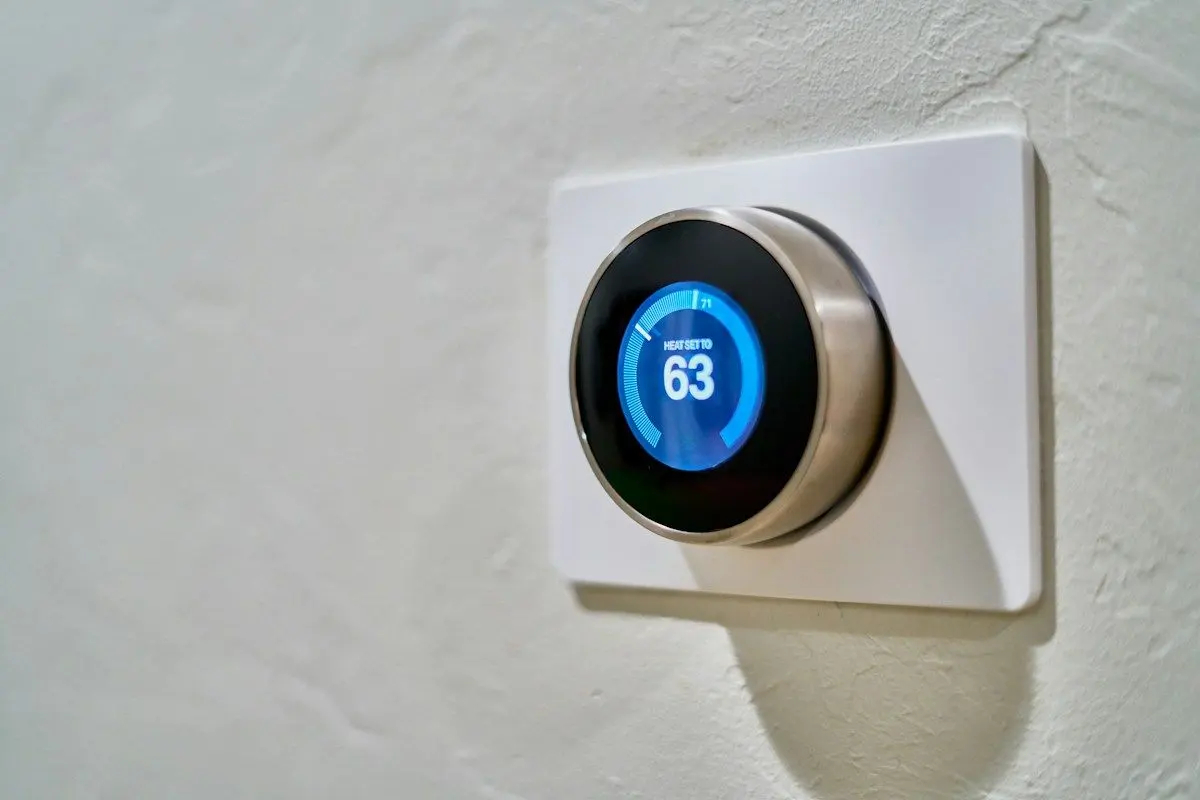
A smart thermostat saves most households $50 to $180 a year on heating and cooling, and only when someone actually uses the scheduling. The savings don’t come from the chip or the app; they come from setbacks, stretches where the house deliberately drifts warmer or cooler. The thermostat is just the enabler that sets those stretches and cancels them on time.
Where the Savings Actually Come From
Your furnace and AC run less when the indoor temperature sits closer to the outdoor temperature. Let the house drift 8 degrees cooler overnight in winter and again during the workday, and the equipment simply has less fighting to do. On a home spending $1,900 a year on heating and cooling, a disciplined two-setback routine trims runtime worth roughly 10 to 15 percent, call it $190 to $285 in theory. Real households override schedules when the dog is home, and somebody always comes home early on Friday. Cooling setbacks work the same way in summer, just with a higher setpoint instead of a lower one. That slippage is why honest annual savings land at $50 to $180 for people who use the feature, and near zero for people who don’t.
That’s the sentence worth rereading: an ignored smart thermostat is a $200 manual thermostat. Our ranges lean conservative on purpose; how we estimate costs explains the method behind them.
Smart vs Programmable vs Manual
| Manual | Programmable | Smart | |
|---|---|---|---|
| Typical cost | $20 to $40 | $30 to $80 | $130 to $300 |
| Setbacks happen automatically | No | Only if programmed | Yes |
| Adjusts to your patterns | No | No | Most models |
| Control from phone | No | No | Yes |
| Rebate eligibility | Rare | Occasional | Common |
| Realistic annual savings | About $0 | $50 to $150 if programmed | $50 to $180 if used |
The last row is the uncomfortable one. Every column saves money through the same physics: fewer hours holding a hard 72 degrees. The categories differ only in how reliably they get a real household there.
Three Real-World Scenarios
A 2,200-square-foot two-story in Columbus, $2,100 a year on fuel. Smart thermostat $180, DIY install $0, utility rebate of $75 brings the net cost to $105. The family keeps a real weekday schedule, and the setback routine saves about $210 a year. Payback: roughly six months, then pure savings.
A retired couple home all day, $1,400 a year on fuel. Their only setback window is overnight, which is worth maybe 5 percent, about $70 a year. A $230 smart thermostat is a three-year payback on good behavior, and a $40 programmable they genuinely would set makes more sense. The device should match the household’s actual day.
A heat pump house in the Southeast, $1,600 a year. First winter with deep daytime setbacks, the bill went up $60, because recovery fired the expensive electric strip heat every evening. After configuring the auxiliary heat lockout and easing setbacks to 4 degrees, the same house saved about $130 a year. Configuration matters as much as the hardware.
The $40 Thermostat Problem
A $30 to $80 programmable unit captures most of what a smart one saves, if you program it once and let it run. The obstacle is human rather than technical: plenty of people never program them at all, or override the schedule so often it stops existing. Be honest with yourself here. If you’d genuinely set a weekday schedule and leave it alone, the cheap unit wins on pure math. Manufacturer marketing sometimes claims savings above 20 percent; treat those as lab conditions with disciplined users, not your house.
Buy smart when your schedule varies day to day, when you want to nudge the house from your phone, or when occupancy sensing earns its keep in a home that empties unpredictably. And check rebates first, because they routinely flip the comparison.
Rebates Still Exist, State and Utility Only
The federal 25C tax credit for efficient home equipment expired December 31, 2025, so don’t build one into your math. What survives are utility and state programs, and thermostats are a favorite, because utilities can nudge enrolled thermostats on peak summer afternoons. Typical offers run $25 to $100 off, sometimes instantly through your utility’s online marketplace, occasionally free with enrollment in a demand-response program. Programs and eligible models change each year, so confirm the model number before checkout. Search dsire.org for your state’s database and check your utility’s efficiency page before paying full price anywhere.
Compatibility and Real Install Costs
Check the C-wire before you buy. Many older HVAC setups lack this common wire, and a thermostat starved of power reboots, drops off Wi-Fi, or quietly misbehaves on batteries. If your current thermostat runs on batteries alone, that’s a hint the wall has no C-wire behind it. Some models run without one, and others ship with a $20 to $30 adapter, but a few system types shouldn’t take the adapter at all, so confirm your setup first.
Installation is a 30 to 60 minute DIY job for most people. Kill the breaker and photograph the old wiring before anything comes loose. An HVAC tech charges $100 to $250 if you’d rather not touch it. Heat pump owners have one extra job: set the auxiliary heat lockout, because a thermostat that fires strip heat on a mild recovery morning can erase its own savings in a week.
Mistakes to Avoid
- Expecting the thermostat to fix a leaky house. If the attic is under-insulated, air-seal and insulate first; a $1,500 to $3,500 attic job typically beats any thermostat’s savings, as our attic insulation cost guide details.
- Skipping the C-wire check until the unit reboots during a cold snap.
- Deep setbacks on a heat pump without lockout settings. Aggressive recovery can trigger strip heat that costs more than the setback saved.
- Buying features you won’t use. An app you never open turns a $220 thermostat into an expensive manual one.
- Forgetting the rebate. It’s often the difference between a $200 purchase and a $100 one.
Bottom Line
Buy the smart thermostat for the setbacks it automates, not the logo on the box. Program it or let it learn during week one. Claim the utility rebate, and verify the C-wire before checkout. Keep the equipment underneath it tuned up too, since setbacks save the most on a system that’s running efficiently; our annual HVAC maintenance cost guide covers what service should cost. And when someone promises the device pays for itself in a year, ask to see their utility bill.
FAQ
Do smart thermostats really save money?
Yes, but only through setbacks that actually happen. Households that use scheduling or occupancy features typically save $50 to $180 a year, while households that never touch the schedule save close to nothing. The device automates the behavior, and the behavior creates the savings.
What setbacks save the most?
Set the temperature back 7 to 10 degrees from your comfort setting for at least 8 hours at a stretch, overnight and while the house is empty. Longer setbacks save more until recovery costs catch up, which mostly concerns heat pumps. A schedule you actually keep beats an aggressive one you cancel.
Do I need a C-wire for a smart thermostat?
Most models need one, though several run without it or with a $20 to $30 power adapter. Check before ordering: kill the breaker and pull the current thermostat, then look for a wire on the C terminal. A spare unmarked wire in the wall can often be pressed into service at both ends.
Are there still rebates for smart thermostats in 2026?
Utility and state rebates are alive and common, typically $25 to $100, and some utilities provide thermostats free with demand-response enrollment. The federal 25C tax credit expired at the end of 2025. Check dsire.org and your utility’s efficiency marketplace before you pay full price.