
For a house with healthy existing ductwork, central air is cheaper: $5,500 to $10,000 to replace a 3-ton system, versus $7,000 to $12,000 for a multi-zone mini split covering the same square footage. If the house has no ducts, the comparison flips hard, because new ductwork adds $4,000 to $10,000 to the central side.
That’s the whole decision in two sentences, but the details change which one wins for your house. Cooling bills, room control, and lifespan all tilt differently. Here’s the full breakdown.
Head-to-Head Costs
The upfront numbers depend almost entirely on ducts you already have.
| Factor | Mini split | Central air |
|---|---|---|
| One room / small area | $2,800–$5,500 | Rarely sensible alone |
| Whole house, no existing ducts | $7,000–$12,000 (3–4 zones) | $9,500–$20,000 (with new ducts) |
| Whole house, existing good ducts | $7,000–$12,000 | $5,500–$10,000 |
| Cooling efficiency (SEER2) | 20–30 typical on current units | 14–17 typical replacements |
| Duct energy losses | None | 20–30% if ducts run through an attic |
| Room-by-room control | Yes, per head | One thermostat, one zone |
| Heating | Yes, most units heat below 0°F | Cooling only (pairs with a furnace) |
| Typical lifespan | 12–15 years | 12–15 years (ducts 20–30) |
| Visible footprint | Wall units in each room | Vents and one outdoor condenser |
The efficiency gap is real but smaller than the SEER2 numbers suggest, because duct losses do part of the damage on the central side. A 3-ton central unit at SEER2 15 draws about 2,400 watts while running (36,000 BTU divided by 15). A ductless multi-zone doing the same work at SEER2 22 draws about 1,640 watts. In a Texas summer, 8 hours a day across 120 days at $0.15 per kWh, that’s roughly $345 versus $235 per season, before counting the 20 to 30 percent that leaky attic ducts add to the central bill.
Three Houses, Three Answers
House 1: 1,900 sq ft in Dallas, ducts in good shape, AC died at 14 years. Central replacement wins outright. A like-for-like 3-ton swap costs $6,500 and takes a day. The 4-zone mini split alternative quoted $11,300, and there’s no benefit to pay for since the existing ducts already deliver air evenly.
- Central: condenser $3,400, coil $900, labor $1,600, electrical and pad $450, permit $150 = $6,500
- Mini split equivalent: 4-head system $6,800, labor $2,400, materials $900, electrical $1,000, permit $200 = $11,300
House 2: 1962 ranch in Sacramento, zero ductwork. Central air means installing ducts from scratch, which is the expensive version of the problem. Framing chases, cutting ceiling registers, and sealing it all adds $5,000 to $9,000 to the job.
- Central with new ducts: system $5,800, ductwork $6,500, labor $2,200, electrical $600, permit $250 = $15,350
- Mini split, 3 zones: equipment $4,500, labor $1,900, materials $750, electrical $850, permit $150 = $8,150
The mini split saved about $7,000 and conditioned the rooms people actually use.
House 3: 400 sq ft bedroom addition in Ohio. The existing central system is 6 years old and fine, but it’s probably not sized for the new room. Extending ducts and upsizing the condenser runs $7,000 to $9,000 and means replacing working equipment. A single-zone mini split did the job for $3,900.
The pattern holds across these cases: central air wins where ducts exist and work, and mini splits win everywhere else.
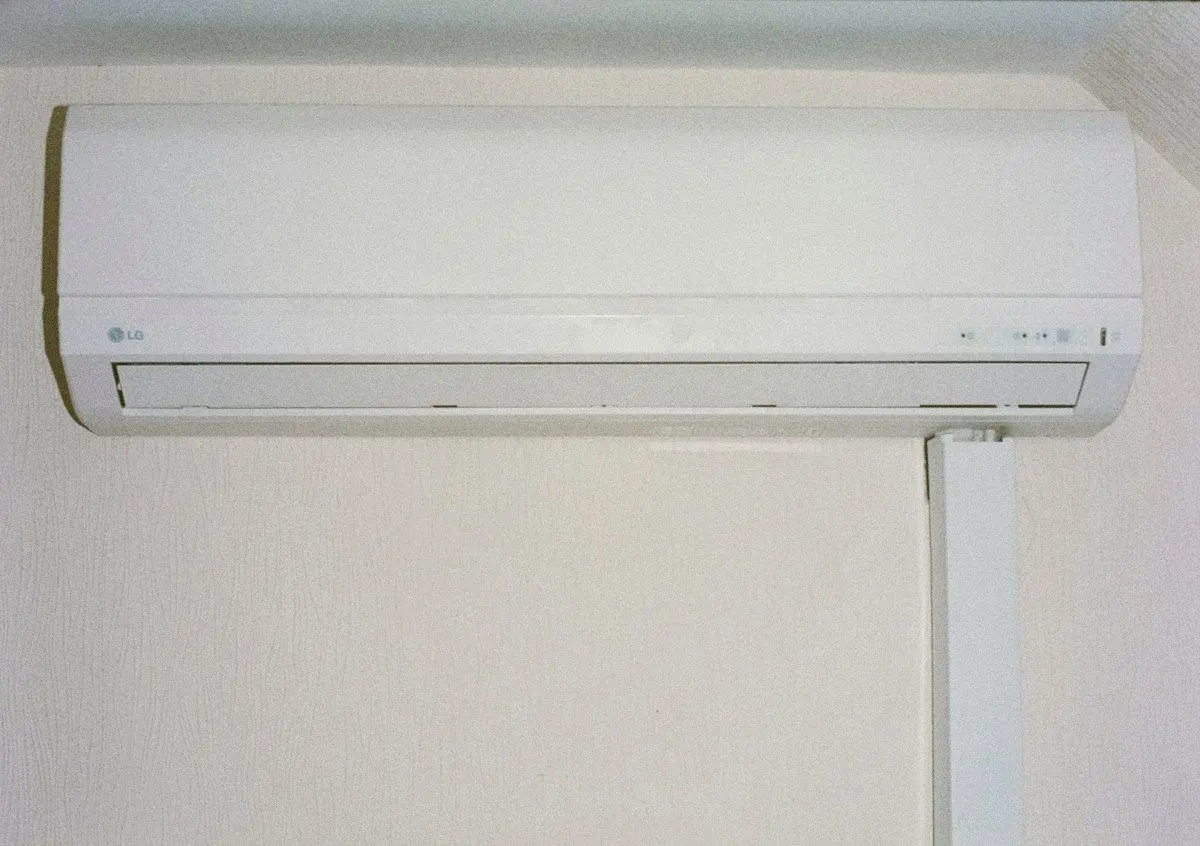
Ways to Pay Less on Either
Get three written quotes no matter which direction you’re leaning. The spread between the cheapest and median quote routinely runs $1,000 to $2,000 on comparable scopes. A quote that can’t explain its own line items isn’t the one to take.
Book the work in the shoulder season. October through March, HVAC crews are hunting for work, and both central and mini split installs commonly come in $200 to $600 cheaper than a July booking.
Right-size before you sign anything. An oversized central unit short-cycles and dehumidifies poorly. An oversized mini split does the same, one head at a time. Manual J load calcs take a contractor twenty minutes and save you years of clammy air.
Check rebates, but check the right ones. The federal 25C tax credit expired December 31, 2025, so disregard any article still promising 30 percent back from the IRS. State and utility rebates of $300 to $1,000 for high-efficiency equipment are still common; DSIRE tracks what’s live in your zip code.
Mistakes to Avoid
Assuming your ducts are fine without looking. Half the central-versus-ductless decision rides on duct condition, and most homeowners have never been in their attic with a flashlight. Crushed flex duct and disconnected runs are common after 30 years. Get the ducts inspected before you price a central replacement, and read our ductwork replacement cost breakdown if the news is bad.
Comparing old SEER ratings to SEER2. SEER2 is tested under stricter conditions, so a SEER2 15 is not the same as an old SEER 15. Comparing mismatched ratings makes the ductless side look better than it is, or occasionally worse.
Ignoring heating. Most mini splits heat as well as they cool, which changes the math in homes with aging furnaces. A central AC pairs with a gas furnace and can’t heat on its own. Whichever system you buy, you’re also choosing a heating strategy, and our heat pump vs gas furnace comparison covers that side.
Buying four wall units for a house that hates them. Mini split heads are visibly there in a way that ceiling vents aren’t. Some buyers love them, some hate them. If you’re selling within five years and the local market expects conventional central air, factor that into the choice.
Skipping the repair question. A 10-year-old central system with a bad capacitor is a $250 repair, not a $6,800 replacement. Our repair or replace guide covers the age-versus-cost thresholds.
The Bottom Line
If you have ducts in good condition, central air is the cheaper install by $1,500 to $3,000 and nobody will miss the wall units. If you have no ducts, ducts in bad shape, or rooms that never cool right, mini splits win on both install cost and monthly bills, often by thousands. The honest way to decide costs nothing: get one quote for each path and compare the actual numbers for your house.
Our mini split cost guide covers per-zone pricing, and the mini split cost calculator adjusts the ranges for your rooms and region.
FAQ
Which is cheaper to run, mini split or central air?
Mini splits usually win, thanks to higher SEER2 ratings and zero duct losses. The saving on a 3-ton-equivalent load works out to roughly $100 to $200 per cooling season in a hot climate, and more if your ducts leak into an attic. If your ducts are sealed, insulated, and inside conditioned space, the gap narrows a lot.
Do mini splits heat as well as they cool?
Yes, and cold-climate rated models hold full capacity down to around 5°F and keep working below 0°F. Standard models lose capacity in the 20s. If heating matters in your climate, buy the cold-climate rated version, which costs 15 to 25 percent more in equipment but replaces a furnace entirely in many homes.
Which lasts longer?
Both last about 12 to 15 years with maintenance. Ducts themselves last 25 to 30 years, which is an argument for central air if you’re installing new ducts anyway. Mini splits have no ducts to age out, but each indoor head has a fan and board that can fail individually.
Can I use both in the same house?
Yes, and it’s a legitimate strategy. Plenty of homes run central air for the main living areas and add a single-zone mini split for a problem room like a bonus room over the garage or a sun-facing upstairs bedroom. The hybrid approach costs less than re-engineering the whole duct system to fix one stubborn room.