
Every watt that a device draws around the clock uses 8.76 kWh a year, which costs about $1.60 at the US average residential rate of 18.31¢ per kWh (EIA, July 2026; our arithmetic). That one number is enough to size any standby load: a box that idles at 10 W costs about $16 a year, and one that idles at 50 W costs about $80. The Natural Resources Defense Council’s 2015 Home Idle Load study estimated that always-on but inactive devices cost the average US household about $165 a year, at the 12.5¢ national rate of that time. This guide shows how to price your own devices, where the NRDC figure comes from and what it does and does not include, and which fixes pay back first.
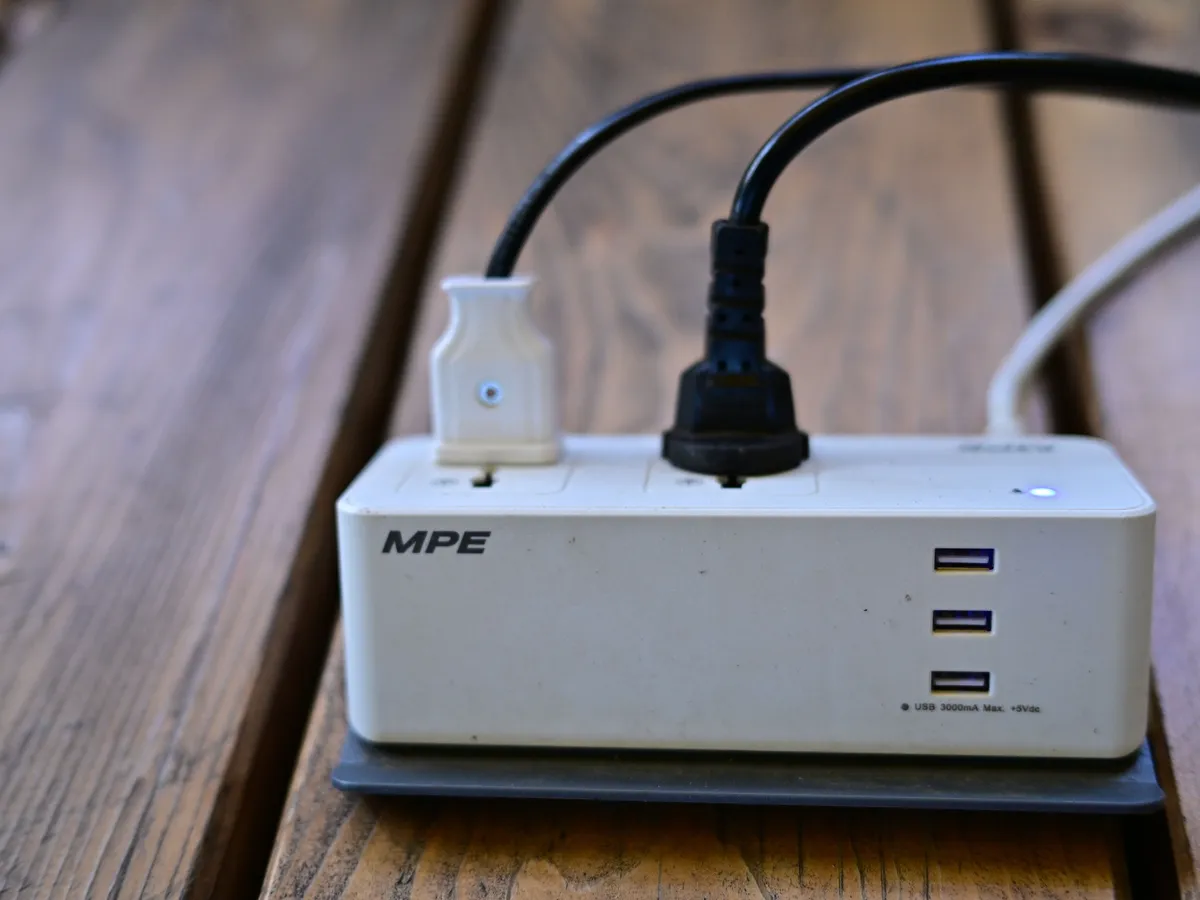
The Rule: One Watt Is About $1.60 a Year
The arithmetic is short enough to do in your head:
1 watt × 24 hours × 365 days ÷ 1,000 = 8.76 kWh a year, and 8.76 × $0.1831 = $1.60.
| Always-on draw | kWh a year | Cost a year at 18.31¢ |
|---|---|---|
| 1 W | 8.8 | $1.60 |
| 5 W | 43.8 | $8.02 |
| 10 W | 87.6 | $16.04 |
| 20 W | 175.2 | $32.08 |
| 50 W | 438 | $80.20 |
| 100 W | 876 | $160.40 |
Multiply by your own state’s rate for a closer figure: at Hawaii’s 48.00¢ the same 10 W costs about $42 a year, and at Louisiana’s 12.72¢ about $11 (EIA July 2026 rates; our arithmetic). Our state-by-state electric bill guide lists every state.
What the NRDC Study Actually Found
The NRDC’s Home Idle Load study analyzed smart-meter data from about 70,000 homes in northern California and concluded that the average US household spends about $165 a year on electricity for devices that are on but not in active use. Three caveats matter before you quote it:
- The sample was regional. The data came from northern California homes, then scaled to the US.
- “Idle” is broader than “standby.” The study counts always-on devices such as set-top boxes, modems and refrigerators’ overnight base load, not just a standby light on a switched-off appliance.
- The price is old. The $165 used the 12.5¢ national rate of 2015. Repricing the same energy at 18.31¢ gives about $242 a year (our arithmetic; $165 ÷ $0.125 is about 1,320 kWh, which works out to a constant 150 W).
Older Lawrence Berkeley National Laboratory work on standby power, from the 2000s, put the average home at roughly 50 W of standby draw and around 5% of residential electricity. Devices have changed since, but the order of magnitude is consistent: a typical household leaks somewhere between 5% and 12% of its electricity through always-on loads, so the prize is a few hundred kilowatt-hours a year, not thousands. For scale, EIA’s average household buys about 10,791 kWh a year (2022 data), so 1,320 kWh is about 12% of that (our arithmetic).
Pricing Your Own Devices
Published idle wattages vary by model, so the table below uses round illustrative assumptions of our own, not measured values. Replace the watts with what a plug-in meter reads on your device and the cost scales in proportion.
| Device (always plugged in) | Assumed idle draw | Cost a year at 18.31¢ |
|---|---|---|
| Soundbar or speaker in standby | 2 W | $3.21 |
| Printer in standby | 3 W | $4.81 |
| Game console in instant-on mode | 10 W | $16.04 |
| Modem plus router | 15 W | $24.06 |
| Cable or DVR set-top box | 20 W | $32.08 |
| Desktop PC left on at idle | 50 W | $80.20 |
The point of the table is the pattern. Most single devices cost a few dollars a year. A small number of devices that never really sleep, such as a DVR, a gaming PC that stays on or a second refrigerator, account for most of the total. Measure those first. Our gaming PC electricity cost guide covers the biggest one in detail.
How to Measure Instead of Guess
A plug-in electricity meter costs about $25 (our estimate; prices vary) and reads watts directly. Plug a device in through it, put the device in its standby state and read the display. Anything above a few watts is worth a closer look. For a whole-house view, turn off everything you can on a quiet night and read your smart meter or utility app: the overnight base load, in watts, is your always-on total. A fridge is part of it, so do not expect zero.
Fixes, in Order of Payback
- Switch off the worst offenders at the source. A switched power strip behind the TV and another at the desk cost a few dollars and cut an entire cluster of standby loads in one move. Strips only help for devices that do not need to stay powered, so leave the DVR and router alone.
- Turn off instant-on and quick-start modes. TVs, game consoles and streaming boxes often offer a mode that keeps them half awake for faster startup. The setting costs watts all day to save seconds.
- Unplug or retire the second refrigerator. An older fridge or freezer in the garage can draw far more than any gadget. If it holds little, the savings are real; see how to lower your electric bill for how it ranks against other fixes.
- Put recirculating pumps and similar devices on timers. Hot-water recirculation pumps, aquarium gear and some heaters can run on a schedule instead of continuously.
- Replace very old set-top boxes. Ask your provider about a newer box, since newer models are generally more efficient than the oldest DVRs.
Do not buy “smart” plugs for everything. Many smart plugs draw about a watt themselves (check the spec sheet), which can cancel the savings on a device that only idles at one or two watts.
The Bottom Line
Standby loads are real, but they are a modest share of the bill. The NRDC estimated about $165 a year per household at 2015 prices, which is roughly $242 at 18.31¢ (our arithmetic), and each continuous watt costs about $1.60 a year. The money is in a handful of devices that never rest, so find them with a $25 meter, turn off instant-on modes, put clusters behind a switch and ignore the rest. For the bigger levers, such as cooling and heating, start with our guide on why electric bills are so high.
FAQ
How much does vampire power cost per year?
About $1.60 for every watt that stays on all year at the US average rate of 18.31¢ per kWh (our arithmetic). The NRDC estimated the average US household’s idle load at about $165 a year in 2015, which is roughly $242 at today’s average rate.
Which devices use the most standby power?
Devices that never fully sleep: DVR and cable boxes, game consoles in instant-on mode, desktop computers left on, networking gear and extra refrigerators. Measure each with a plug-in meter, since idle draw varies a lot between models.
Is it worth unplugging chargers and small electronics?
Rarely. A phone charger with nothing attached draws well under a watt on modern models (check with a meter), so unplugging one saves cents a year. Clusters of AV gear on a switched strip save more.
Do power strips actually save electricity?
Yes, when the strip is switched off and everything on it can safely lose power, because it removes all of those devices’ standby draw at once. The saving is the sum of their idle watts times $1.60 a year each. A strip that stays switched on saves nothing.
Does standby power show up on my smart meter?
Yes. Your overnight base load, with everything you can turn off switched off, appears as a steady wattage on a smart meter or your utility’s usage graph. The refrigerator is part of that number.