
A typical 35 to 50 pint portable dehumidifier costs about 9¢ an hour to run and about $94 over a full season, at the US average residential rate of 18.31¢ per kWh (EIA, July 2026). Smaller units under 25 pints cost about $51 a season. Those figures come from the ENERGY STAR certified-dehumidifier list, where the median 35 to 50 pint model is rated at 514 kWh a year, and from our arithmetic on top of it. This guide shows the cost by size, what a pint of water costs to remove, how state electricity rates change the total and which habits cut the runtime. It is part of our appliance electricity cost guide.
Where the Numbers Come From
We pulled the ENERGY STAR certified-dehumidifier dataset (data.energystar.gov, retrieved October 2026): 535 portable models and 24 whole-home models. Each lists a water removal capacity in pints a day, an integrated energy factor (IEF, liters of water removed per kWh) and an annual energy figure. The annual figure assumes 1,095 operating hours a season, which we confirmed by arithmetic: a model rated at 49.32 pints a day and 2.10 L per kWh works out to about 507 kWh over 1,095 hours, against 502 kWh listed. Dividing the annual kWh by 1,095 gives the average power draw while running, which is what the hourly column below uses. These are our derived figures, not label watts, and your unit’s nameplate may differ.
Cost by Size
| Size (median of ENERGY STAR list) | Models | Median capacity (pints a day) | Median kWh a season | Implied draw while running | Cost per hour | Cost per season |
|---|---|---|---|---|---|---|
| Portable, up to 25 pints | 267 | 22.7 | 276 | 252 W | 4.6¢ | $50.54 |
| Portable, 25 to 35 pints | 38 | 32.5 | 341 | 311 W | 5.7¢ | $62.44 |
| Portable, 35 to 50 pints | 230 | 49.7 | 514 | 469 W | 8.6¢ | $94.02 |
| Whole-home | 24 | 65.0 | 628 | 574 W | 10.5¢ | $114.99 |
All costs are our arithmetic at 18.31¢ per kWh. Most households run a unit for part of the year, so a season of 1,095 hours is about 15 weeks of 24-hour running, or longer if the unit cycles on a humidistat. If yours runs less, scale the cost down proportionally. A monthly figure is simple: at the 35 to 50 pint median, running around the clock for a 30-day month (720 hours) costs about $62, and running 8 hours a day for a month (240 hours) costs about $21.
What a Pint of Water Costs
IEF gives a cleaner comparison than watts because it measures moisture removed per unit of electricity. The median portable model on the list has an IEF of 2.01 L per kWh, with a range of 1.70 to 2.24. One pint is 0.4732 liters, so removing one pint takes about 0.235 kWh, or about 4.3¢ at 18.31¢ (our arithmetic). A model at the low end of the range (1.70) costs about 5.1¢ a pint, and the best (2.24) about 3.9¢. In practice, a damp basement that drops 20 pints on a muggy day is a $0.86 day of dehumidifying at the median. Compare candidate models on IEF, then on capacity.
ENERGY STAR says certified dehumidifiers use about 20% less energy than similarly sized conventional units while removing the same amount of moisture. We could not tie that to a single published baseline, so we use the list’s own medians above instead.
What It Costs in Your State
Using the 35 to 50 pint median of 514 kWh a season and EIA’s July 2026 state rates (our arithmetic):
| State (rate) | Cost a season | Cost per hour |
|---|---|---|
| Louisiana (12.72¢) | $65.32 | 6.0¢ |
| Texas (15.88¢) | $81.54 | 7.4¢ |
| US average (18.31¢) | $94.02 | 8.6¢ |
| New York (29.90¢) | $153.54 | 14.0¢ |
| California (33.61¢) | $172.58 | 15.8¢ |
| Hawaii (48.00¢) | $246.48 | 22.5¢ |
Humid climates mean more hours and often cheaper electricity, so check both. Our state-by-state electric bill guide lists every state’s rate, and the electric bill estimator shows how a unit running all summer changes a monthly total.
The Hidden Cost: It Heats the Room
Every watt a dehumidifier draws ends up as heat in the room, since its compressor and fan energy are released as warmth along with the heat given off as water condenses. At the 469 W implied draw of the 35 to 50 pint median, that is about 1,600 Btu per hour of heat (469 W times 3.412, our arithmetic). In a closed basement the effect is small. In a room that you also air-condition, the air conditioner has to remove that heat too. For scale, our AC cost per hour guide prices a 12,000 Btu per hour window unit at about 15¢ an hour.
Cutting the Runtime
The cheapest dehumidifier hour is the one you do not run, so aim for the lowest humidity that solves your problem:
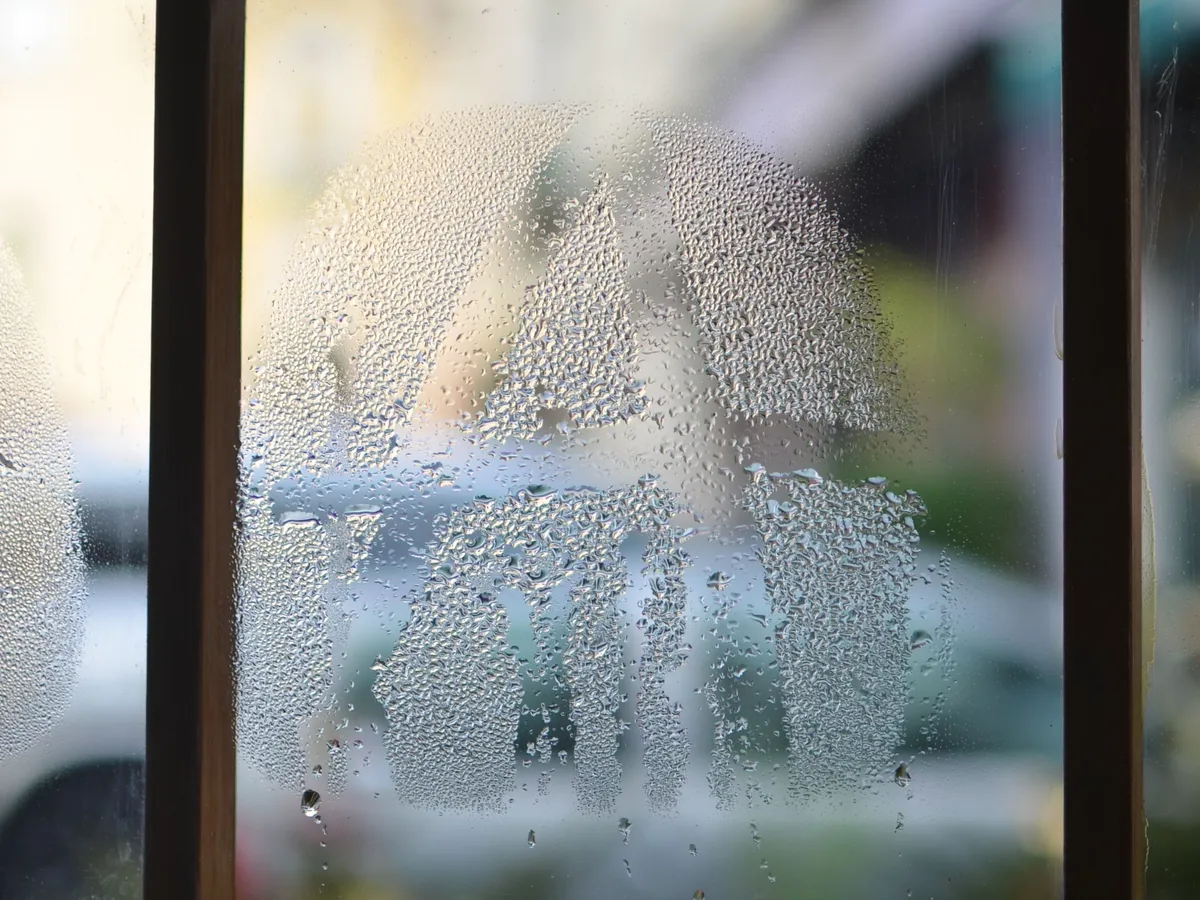
- Target 30% to 50% relative humidity. ENERGY STAR gives 30% to 50% as the generally optimum range for a building, and 30% to 40% in cold climates during the heating season to prevent window condensation. Running a unit down to 35% in July costs more than holding 50%.
- Use the built-in humidistat rather than the continuous setting so the compressor cycles off once the target is reached.
- Close the space. Keep basement doors and windows shut while the unit runs, or it chases outdoor air.
- Fix the source. A unit that runs constantly in a basement may be fighting water coming through the walls; see our basement waterproofing cost guide.
- Drain by hose to avoid a full bucket shutting the unit off, and clean the filter so air flows freely.
For the larger levers on a bill, our guide to lowering your electric bill ranks them.
Sizing Without Overspending
The capacity on a label is pints a day at the rating’s test condition, so a unit rated at 50 pints a day in a damp test chamber will pull less in a drier room. We have no sourced sizing chart tying square feet to pints, so we do not give one. What the data does show is that bigger units are not much more efficient: the median IEF is 1.79 for units up to 25 pints, 2.02 for 25 to 35 pints and 2.01 for 35 to 50 pints. Moisture removed costs about the same per pint, so choose capacity for how quickly you want the room dry and then compare IEF.
The Bottom Line
At 18.31¢ per kWh, a dehumidifier costs about 5¢ to 11¢ an hour depending on size, about $51 to $115 over ENERGY STAR’s 1,095-hour season, and about 4¢ for each pint of water removed at the median efficiency. Your state’s rate matters more than the model: the same unit costs $65 a season in Louisiana and $246 in Hawaii. Hold humidity near 40% to 50%, use the humidistat and fix any water source, and the bill stays near the low end.
FAQ
How much electricity does a dehumidifier use per day?
A 35 to 50 pint portable unit draws an implied 469 W while running, so 24 hours continuous is about 11.3 kWh, or about $2.06 a day at 18.31¢ (our arithmetic from ENERGY STAR medians). A humidistat reduces that because the compressor cycles.
Is it cheaper to run a dehumidifier or an air conditioner?
For a single room, a dehumidifier at about 9¢ an hour is cheaper than a 12,000 Btu per hour window AC at about 15¢ an hour, but they do different jobs and the dehumidifier adds heat. Our AC guide has the full figures.
How many hours a day should I run a dehumidifier?
Only as long as it takes to reach your target humidity. We have no sourced standard figure; a humidistat set to 40% to 50% decides it for you, and a unit that never reaches target suggests a moisture source or an undersized unit.
Do ENERGY STAR dehumidifiers save money?
ENERGY STAR says they use about 20% less energy than similarly sized conventional units. On a $94 season, a 20% cut would be about $19, though we did not verify the baseline.
Does a dehumidifier use a lot of power compared with other appliances?
More than a refrigerator over a season (514 kWh against 457 kWh a year for the median full-size refrigerator) but concentrated in a few months. See the comparison in our appliance guide.