
At the US average residential rate of 18.31¢ per kWh (EIA, July 2026), an 8,000 Btu/h window air conditioner costs roughly 10¢ an hour to run, a 12,000 Btu/h window unit about 15¢, a 3-ton central system about 43-49¢, and a 12,000 Btu/h ductless mini-split about 11¢. Those are our estimates from published efficiency ratings, so they describe the compressor running flat out; real hourly cost swings with outdoor temperature, and units cycle off once the room is cool. Below is the formula, the cost tables, what the Department of Energy assumes for annual hours, and how your state changes the answer. Cooling matters: the EIA lists air conditioning as the largest single residential electricity use, at 19% of site electricity in 2020.
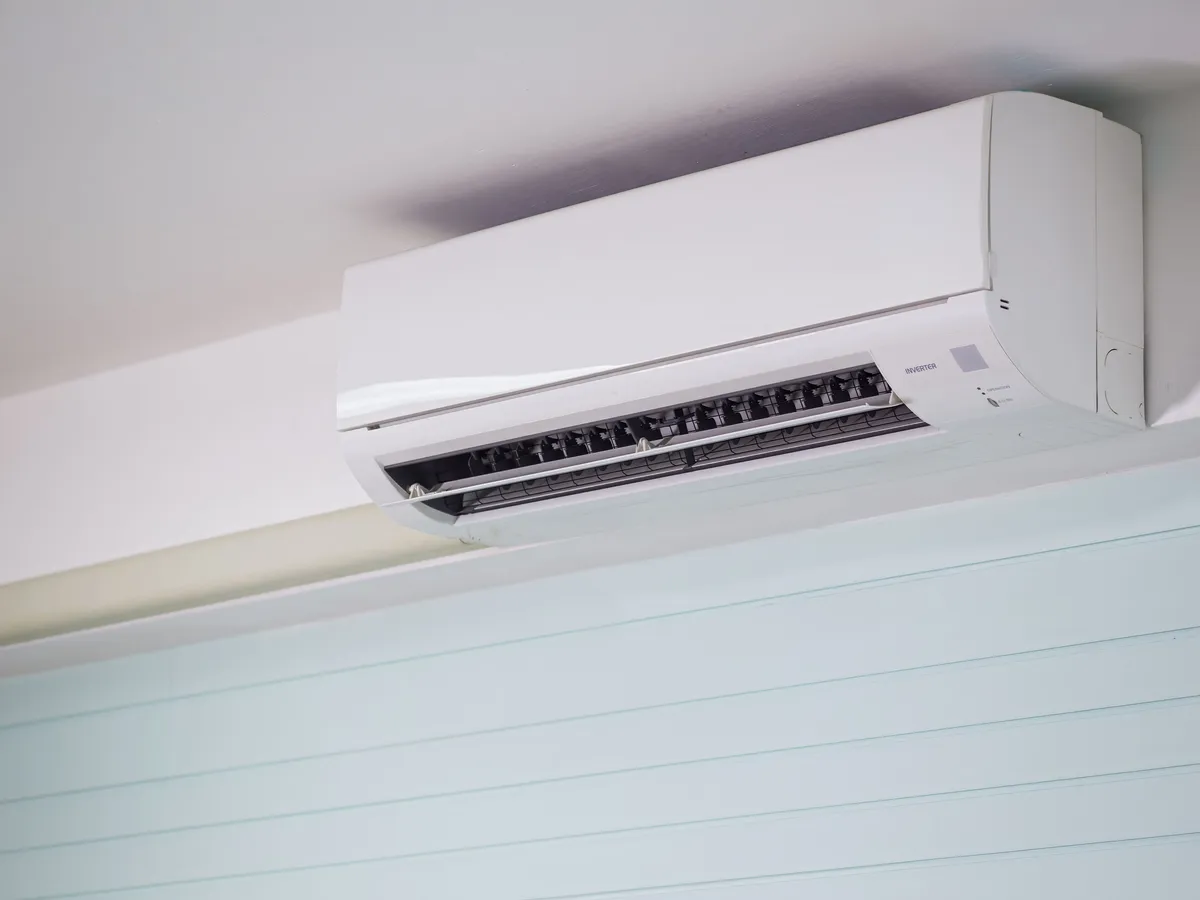
The Formula: Btu/h Divided by Efficiency Gives Watts
Every air conditioner’s power draw follows from two label numbers: cooling capacity in Btu per hour, and an efficiency rating in Btu per watt-hour (EER or CEER for room units, SEER2 for central systems and mini-splits). Divide one by the other:
Watts = Btu/h ÷ efficiency rating
Then multiply by hours and your rate: kilowatts × hours × $0.1831. This is our arithmetic, and it has one honest limitation. SEER2 is a seasonal average across a range of outdoor temperatures, so a central unit pulling harder on a 105-degree afternoon draws more than the seasonal figure, and at mild temperatures less. Treat the tables as a planning range, not a meter reading. A plug-in power meter measures window units exactly; central systems are 240-volt and need a clamp meter or a smart panel.
What Each Type Costs per Hour
| Type | Capacity | Efficiency used | Draw (our arithmetic) | Cost per hour |
|---|---|---|---|---|
| Small window unit | 8,000 Btu/h | 14.7 CEER (our assumption) | about 545 W | about 10¢ |
| Window unit, ENERGY STAR | 12,000 Btu/h | 612 kWh over 750 h (DOE) | about 816 W | about 15¢ |
| Window unit, less efficient | 12,000 Btu/h | 826 kWh over 750 h (DOE) | about 1,100 W | about 20¢ |
| Central, 2-ton | 24,000 Btu/h | 15.2 to 13.4 SEER2 | 1,580 to 1,790 W | 29 to 33¢ |
| Central, 3-ton | 36,000 Btu/h | 15.2 to 13.4 SEER2 | 2,370 to 2,690 W | 43 to 49¢ |
| Central, 4-ton | 48,000 Btu/h | 15.2 to 13.4 SEER2 | 3,160 to 3,580 W | 58 to 66¢ |
| Mini-split, one zone | 12,000 Btu/h | 20 to 25 SEER2 | 480 to 600 W | 9 to 11¢ |
The 12,000 Btu/h window rows come straight from the DOE’s Federal Energy Management Program, which compares an ENERGY STAR room unit (14.7 CEER) with a less efficient one (10.9 CEER). It assumes 750 operating hours a year and lists 612 kWh versus 826 kWh annually. Dividing by 750 gives the average draw shown. The 15.2 and 13.4 SEER2 values for central systems are the two reference efficiency levels in DOE’s central-AC purchasing guidance; the 14.7 CEER used for the 8,000 Btu/h row and the mini-split efficiencies are our illustrative choices, since models vary widely.
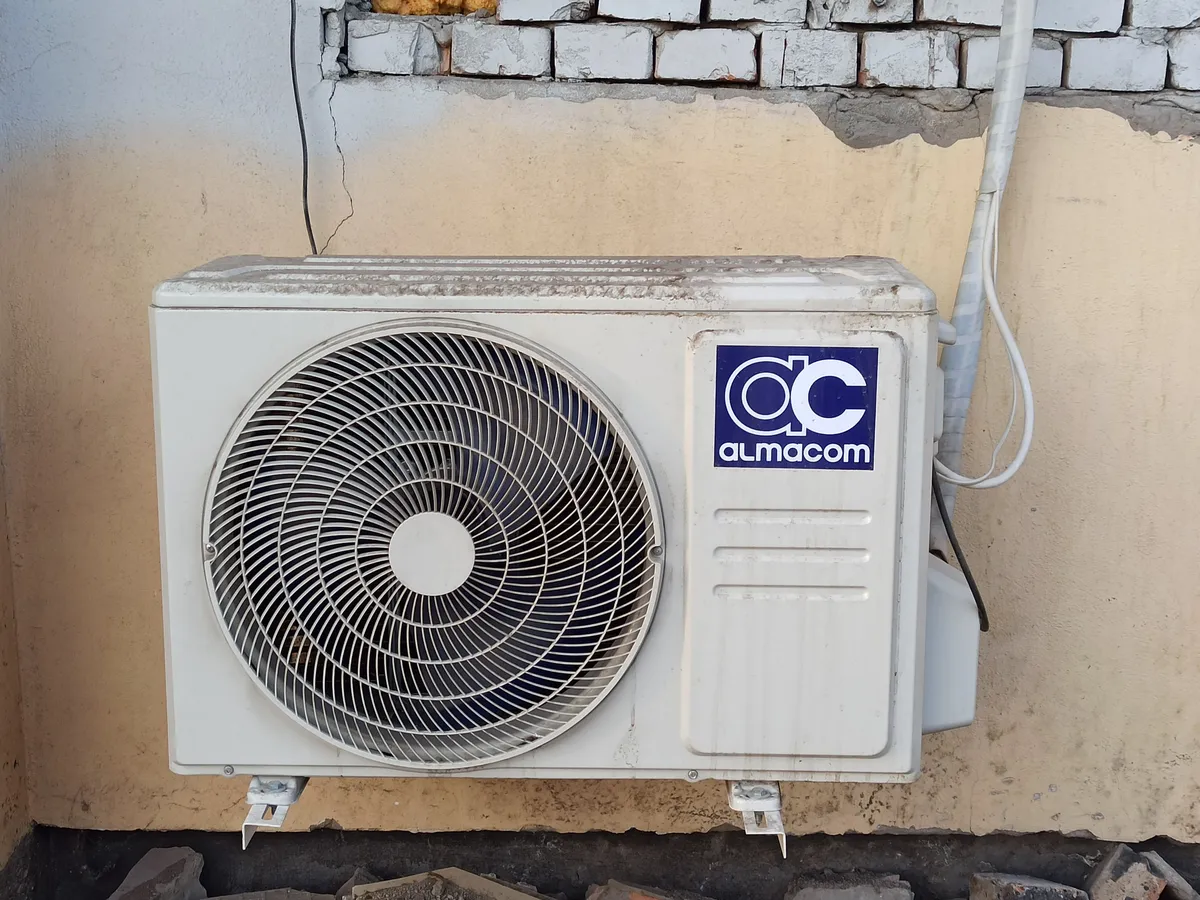
Why Mini-Splits Cost Less per Hour
A mini-split comes out well on two counts. First, efficiency: ratings of 20 SEER2 and up are common, against 13.4 to 15.2 for the central reference points above. Second, ductwork: ENERGY STAR notes that duct losses can account for more than 30% of a home’s space-conditioning energy, and a ductless unit has none. A one-room mini-split at 20 SEER2 therefore draws about 600 W where a central system cooling the whole house draws several times that. The comparison is not like for like, though, because the mini-split cools one zone. The hour-by-hour cost also depends on load, not just the nameplate, and variable-speed (inverter) models typically run below their peak rating once a room reaches temperature. See our mini-split versus central air comparison and the mini-split cost calculator for install price and payback.
From Hourly Cost to a Monthly Bill
Hours are the trap. Running “8 hours a day” does not mean the compressor runs 8 hours; it cycles. If it did run continuously for 8 hours a day across 30 days (240 hours), the cost at 18.31¢ would be, as an upper bound (our arithmetic):
| Type | 240 hours a month |
|---|---|
| 8,000 Btu/h window unit | about $24 |
| 12,000 Btu/h ENERGY STAR window unit | about $36 |
| 3-ton central (15.2 to 13.4 SEER2) | about $104 to $118 |
| 12,000 Btu/h mini-split (20 SEER2) | about $26 |
For annual figures, use the DOE’s own operating-hours assumptions. For a 36,000 Btu/h central unit, the DOE’s purchasing guidance assumes 1,599 cooling hours a year in a hot-dry climate and 3,409 in a hot-humid one. Its published annual energy for a 13.4 SEER2 system is 4,296 kWh in the hot-dry case and 9,159 kWh in the hot-humid case, and 3,787 kWh for a 15.2 SEER2 system in the hot-dry case. DOE priced those at 11¢ per kWh. Repricing the same kilowatt-hours at 18.31¢ gives (our arithmetic):
| 3-ton central system | Annual kWh (DOE) | Annual cost at 18.31¢ |
|---|---|---|
| 15.2 SEER2, hot-dry climate | 3,787 | about $693 |
| 13.4 SEER2, hot-dry climate | 4,296 | about $787 |
| 13.4 SEER2, hot-humid climate | 9,159 | about $1,677 |
The table shows two things at once: climate roughly doubles the cooling bill for the same equipment, and moving from 13.4 to 15.2 SEER2 saves about 12% of the energy.
Your State Changes the Hourly Price
Using the draws from the first table and EIA’s July 2026 state rates (our arithmetic):
| State (rate) | 12,000 Btu/h ENERGY STAR window unit | 3-ton central, 15.2 SEER2 | 12,000 Btu/h mini-split, 20 SEER2 |
|---|---|---|---|
| Louisiana (12.72¢) | 10¢ | 30¢ | 8¢ |
| Texas (15.88¢) | 13¢ | 38¢ | 10¢ |
| US average (18.31¢) | 15¢ | 43¢ | 11¢ |
| New York (29.90¢) | 24¢ | 71¢ | 18¢ |
| California (33.61¢) | 27¢ | 80¢ | 20¢ |
| Hawaii (48.00¢) | 39¢ | $1.14 | 29¢ |
Our electric bill by state guide has every state’s rate, and our AC running cost calculator prices your own unit.
Ways to Pay Less Per Cooling Hour
- Size it right. ENERGY STAR warns that an oversized room air conditioner costs more to buy, wastes energy and does not cool better. Match Btu/h to the room.
- Seal the install. ENERGY STAR says a badly installed room unit can leak as much air as a 6-square-inch hole.
- Raise the setpoint when you are out. The DOE says a thermostat setback of 7-10°F for 8 hours a day can save as much as 10% a year on heating and cooling. Our smart thermostat guide covers automating it.
- Service the system. Dirty filters and coils make equipment work harder; see annual HVAC maintenance costs.
- Replace aging central equipment when it fails. Compare options in the central AC replacement guide.
For the full list of bill cutters, see how to lower your electric bill.
The Bottom Line
At the 18.31¢ US average, a window AC costs about 10-20¢ an hour, a 3-ton central system 43-49¢, and a one-zone mini-split roughly 9-11¢ at typical efficiency ratings. The same equipment costs about 2.6 times as much per hour in Hawaii as at the average, and nearly 4 times more than in Louisiana. For a monthly estimate, multiply by the hours the compressor actually runs, not the hours the system is on, and use the DOE’s annual-hours assumptions as a sanity check.
FAQ
How much does it cost to run an air conditioner all day?
For 24 continuous hours at the US average rate: about $2.40 for an 8,000 Btu/h window unit, $3.60 for a 12,000 Btu/h ENERGY STAR window unit, and about $10 to $12 for a 3-ton central system (our arithmetic from the table). Real cost is lower because compressors cycle off once the temperature is reached.
Is it cheaper to run a window AC or central air?
Per hour, a window unit is far cheaper, at roughly 15¢ versus 43-49¢ for a 3-ton system. But a window unit cools one room. If you only use one or two rooms, a window or mini-split can beat running the whole house; for whole-house cooling, central air or several mini-split heads is the fair comparison.
How many watts does a central air conditioner use?
Our estimate from capacity divided by SEER2: a 2-ton draws about 1,600-1,800 W, a 3-ton about 2,400-2,700 W and a 4-ton about 3,200-3,600 W on a seasonal-average basis. Peak draw on the hottest days can be higher.
Do mini-splits use less electricity than window units?
Per Btu of cooling, usually yes. At 20 SEER2 a 12,000 Btu/h mini-split draws about 600 W, versus about 816 W for an ENERGY STAR window unit of the same capacity (both our arithmetic). Mini-split efficiency varies by model, so check the SEER2 on the label.
How can I find my AC’s real running cost?
Divide the unit’s cooling capacity by its efficiency rating for watts, or measure a window unit with a plug-in power meter. For central systems, check the kWh on your bill for a hot month against a mild one.