
A professional HVAC tune-up costs $90 to $220 per visit for a single system, with most companies charging $120 to $160 for a standard cleaning and inspection. Twice-a-year service on both heating and cooling runs $180 to $350 a year. Anything under $60 is a lead-generation tool, not a maintenance visit, and the people running those specials make their money on what they find “wrong” once they’re inside your house.
That doesn’t make tune-ups a scam. Done properly, they catch the small failures that turn into four-figure repairs: a weak capacitor, a clogged drain, a compressor limping toward a July death. The trick is knowing what a legitimate visit includes so you can tell the difference between maintenance and a sales call.
What a Real Tune-Up Includes
| Task | DIY-able? | What the pro adds |
|---|---|---|
| Replace/clean filter | Yes, every 1-3 months | Confirms correct filter size and airflow |
| Clean outdoor condenser coils | Partially, with a hose | Chemical clean and fin comb if heavily fouled |
| Clear condensate drain line | Yes, with wet/dry vacuum | Flush treatment, check float switch |
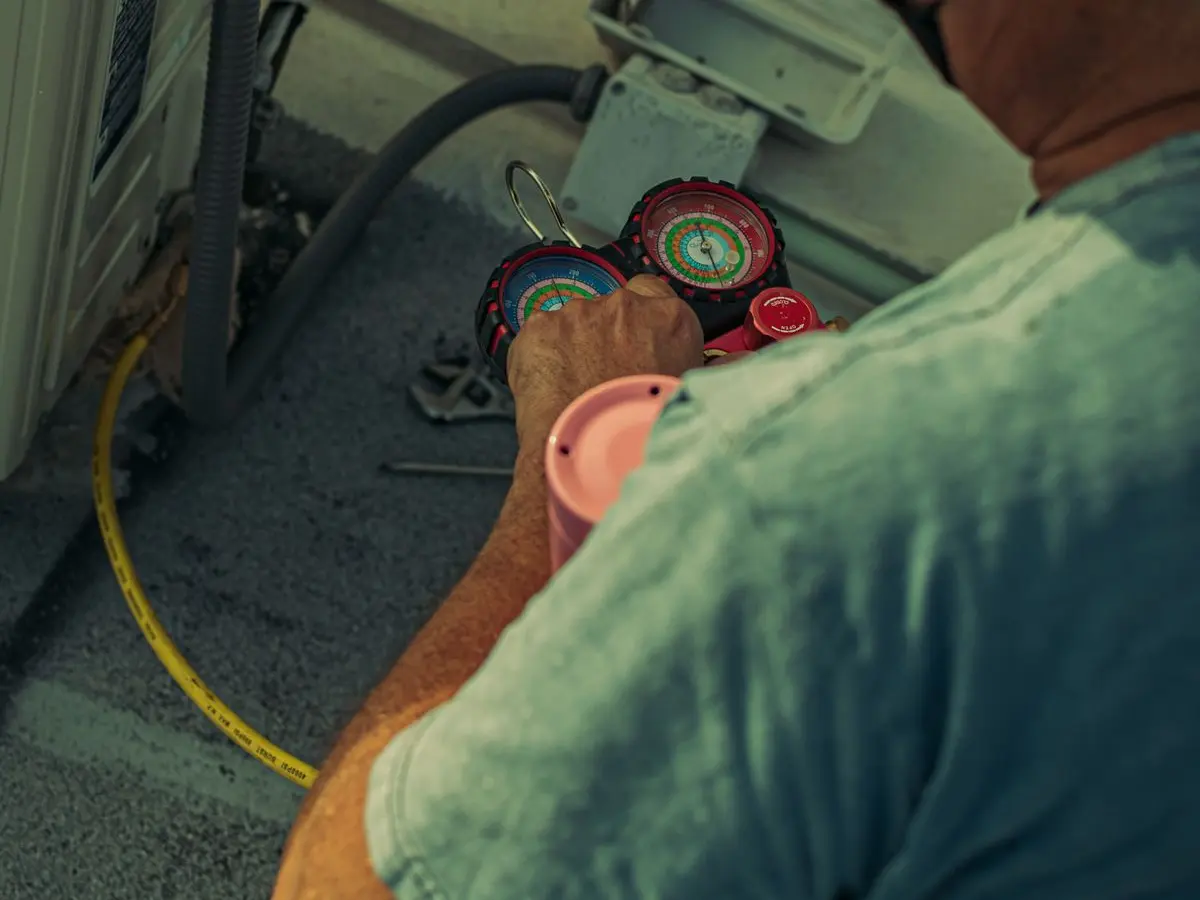
| Check refrigerant charge | No | Gauges, superheat/subcooling, leak check if low |
| Test capacitors and contactor | No | Multimeter readings against rated microfarads |
| Measure temperature split | No | Confirms the system actually moves heat |
| Inspect heat exchanger | No | Camera inspection for cracks, CO risk |
| Check gas pressure and flue | No | Combustion analysis on furnaces |
| Tighten electrical connections | No | Torqued lugs prevent burned boards |
| Lubricate motors/bearings | Rarely needed now | Most modern motors are sealed |
Notice the split. Everything on the DIY side costs little and prevents the most common failures: dirty filters choke airflow and kill blowers, and clogged condensate lines flood ceilings and trip safety switches. The pro side is mostly measurement, and measurement is what you’re actually buying. A tech with gauges and a meter can tell you a capacitor is 15% weak before it fails on the hottest Saturday of the year.
The $59 Special, Decoded
Here’s how the upsell funnel usually runs. You book the cheap visit. The tech spends twenty minutes with a hose and a vacuum, then shows you a photograph of a “rusted” part, a weak capacitor, or a dirty blower wheel, and hands you a sheet of recommended work: $280 for a capacitor that costs $12, $600 for a “deep clean,” or the big closer, a $9,000 replacement because your ten-year-old system “isn’t worth repairing.”
The pattern to watch for is urgency plus vagueness. A legitimate finding comes with a meter reading, a specification, and a price that survives a second opinion. A sales finding comes with a scary photo and “I wouldn’t run it much longer.” The photo of a slightly dirty blower wheel is a favorite, because every blower wheel in every house over five years old looks like that.
None of this means you should refuse every recommendation. When a tech says your capacitor reads below rated microfarads, that’s checkable and usually true. Get the reading and the price in writing, then compare against parts-plus-labor reality: a capacitor swap should run $120 to $250 all-in, not $400.
Maintenance Plans: Do the Math
Most companies sell annual plans at $150 to $300 a year, typically bundling one or two tune-ups, priority scheduling, and a discount on repairs, often 10% to 15%. Whether that’s a good deal depends on what you’d buy anyway.
If you’d pay for a $150 cooling tune-up and a $150 heating check regardless, a $250 plan with a 15% repair discount is roughly break-even before the scheduling perks. That’s worth having if you have an aging system you’re nursing along. If you have a newer system and you’re disciplined about filters, buying single visits when you want them, around $130 each in most markets, usually beats the plan. The main warning: some plans are contracts with auto-renewal and cancellation windows, so read that part before signing.
One honest note on what maintenance actually buys. There’s no reliable evidence that annual tune-ups add specific years to a system’s life, and anyone quoting “up to 5 extra years” is marketing. What maintenance demonstrably does is catch cheap failures early, keep efficiency from sliding as coils foul, and satisfy the warranty documentation requirement many manufacturers impose. Those are real benefits. They’re just narrower than the brochure suggests.
What Actually Extends Equipment Life
Filter discipline comes first, and it’s not close. A $10 filter changed every two months is the difference between a blower motor that dies at year eight and one that’s still running at year fifteen. Second is keeping the outdoor unit clear: two feet of clearance on all sides, no mulch volcanoes, no fence panels pressed against the fins, and a gentle hose rinse when the coils look dusty.
Third is condensate. Pour a cup of white vinegar down the drain line access every spring. A $4 bottle of vinegar prevents the water-damage claim and the emergency Sunday call. Fourth, run the system sensibly; brutal setback-and-recover schedules on old single-stage equipment just add wear.
If you’re tracking this spending against everything else a house demands, our annual home maintenance budget guide puts HVAC service in context with the rest of the checklist.
When Maintenance Stops Making Sense
There’s a point where you’re paying to postpone a decision. As a rough rule, if a repair quote exceeds about a third of the cost of a new system and the equipment is past ten years old, put that money toward replacement instead. A $900 repair on a fourteen-year-old AC is money spent on a machine with a few seasons left; the same $900 on a five-year-old machine is a bargain. We walk through the replacement decision in central AC replacement cost and gas furnace replacement cost.
Two findings should always push you toward replacement rather than repair: a cracked heat exchanger on a furnace, which is a carbon monoxide risk and effectively not repairable, and a compressor failure on an old AC, where the repair cost approaches a full replacement on a unit that’s already halfway through its life.
Bottom Line
Budget $180 to $350 a year for professional tune-ups if you want both systems serviced, or about $130 for a single cooling visit. Do the filters and the drain line yourself, treat cheap specials as sales calls, and keep receipts for the warranty. The best maintenance plan is a $10 filter and someone who owns a gauge. For how we build cost ranges like the ones in this guide, see how we estimate costs.
FAQ
How often should HVAC be serviced?
Once a year is the practical answer for most homes: cooling service in spring, and a furnace check in fall if you have gas heat. Newer systems in mild climates can often go with one combined visit. Older systems and heavy-use climates justify two.
Are HVAC maintenance plans worth it?
They break even for most homeowners and win when your system is older or your plan includes priority scheduling. Compare the plan price against what you’d spend on visits anyway, then read the cancellation and repair-discount terms before signing. Avoid plans that require the selling company to do all repairs at their prices.
What can I do myself between tune-ups?
Change filters every one to three months, rinse the outdoor coil gently each season, keep two feet of clearance around the condenser, and flush the condensate drain with vinegar in spring. These four habits prevent most of the common failures.
Is the $59 tune-up a scam?
The visit is real but rarely complete, and it’s designed to generate repair leads. Go in knowing that any recommendation should come with a measurement and a price you verify. It can be a fair way to meet a company, as long as you treat the upsell sheet as a menu to question rather than a diagnosis to accept.