
Turning down the heat while a house is empty reduces the heat it needs during that period. With a heat pump, however, the cost of restoring the temperature matters too. A deep setback followed by fast recovery can bring on electric resistance backup and erase some or all of the saving.
The useful question is not whether setbacks are always good or always bad. It is which equipment supplies the recovery heat, at what efficiency, and at what electricity price. This guide uses a hypothetical heat balance to show where the decision can change. It does not predict your home’s load or recommend a universal temperature setting.
Why the recovery stage matters
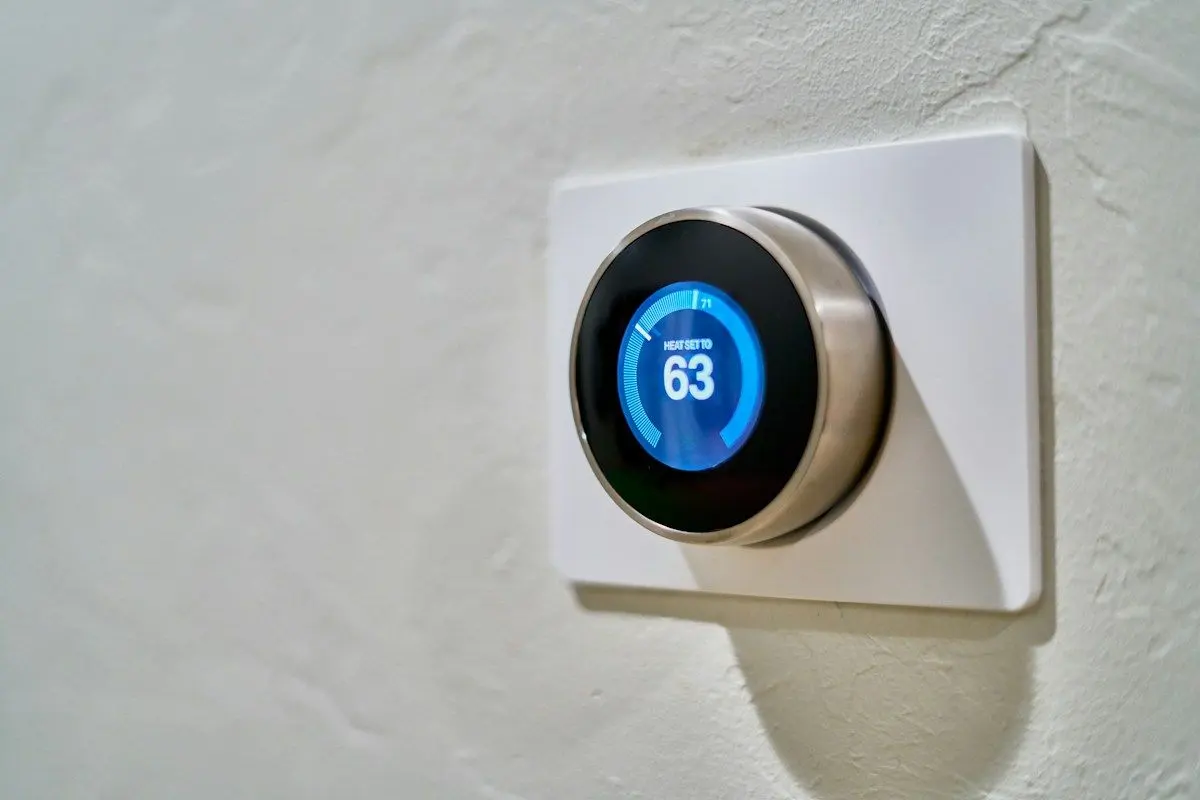
The Department of Energy’s heat-pump purchasing guidance recommends heat-pump-specific thermostats that raise temperature gradually to avoid unnecessary electric resistance heating. That supports a control strategy, not a claim that auxiliary heat should never run.
A heat pump moves heat. Its coefficient of performance, or COP, describes delivered heat divided by electrical input over a defined operating condition. Resistance heat converts electricity to heat at the equipment, with a COP near one. Actual heat-pump performance changes with temperature, defrost, airflow and operating conditions; an annual rating is not an instantaneous recovery COP.
Some homes use a furnace as backup instead of electric strips. The electricity-only calculation below does not describe that dual-fuel arrangement. Confirm your system type before applying advice from another house.
A worked comparison with the same comfort endpoint
Assume two strategies start and end the day at the same indoor temperature, and all conditions except the schedule are identical. The constant-temperature strategy needs 30 kWh of delivered heat over the comparison period. At an assumed heat-pump COP of 3, electrical input is 30 ÷ 3 = 10 kWh.
For the setback strategy, assume reduced heat loss lowers the total delivered-heat requirement to 27 kWh, including recovery. That is 3 kWh less heat than the constant-temperature case. The assumed reduction is not a measured or typical saving; it isolates the effect of changing the recovery heat source.
If the heat pump supplies all 27 kWh at COP 3, it uses 9 kWh of electricity. At an assumed flat $0.25/kWh, that costs $2.25, versus $2.50 for the constant-temperature strategy. The setback saves 25 cents over this comparison period.
Now assume 6 kWh of that same 27-kWh heat requirement comes from resistance backup and 21 kWh from the compressor. Electrical input becomes 6 ÷ 1 + 21 ÷ 3 = 13 kWh. Cost becomes $3.25. The house required less heat, yet the operating cost rose by 75 cents compared with the constant-temperature strategy.
Do not add a second recovery heat allowance to the 27 kWh. Recovery was already included in that number. The purpose is to compare how a fixed amount of required heat is supplied.
Calculate the backup threshold
Let x be the kWh of delivered heat supplied by resistance backup in the setback case. The remaining 27 − x kWh comes from the heat pump at COP 3. Electrical use is:
(27 − x) ÷ 3 + x = 9 + 2x/3.
The constant-temperature case used 10 kWh. Set 9 + 2x/3 equal to 10: x = 1.5 kWh of resistance-delivered heat. Above that threshold, the setback case uses more electricity under these assumptions. Below it, the setback still saves electricity.
For scale, a hypothetical 5-kW resistance stage operating for 18 minutes uses 5 × 18 ÷ 60 = 1.5 kWh. That illustrates how a short period of backup could change this particular example. It does not identify your installed stage size, estimate a real thermostat’s runtime, or prove a setback caused an auxiliary call.
If the compressor COP, heat-loss reduction or backup source changes, the threshold changes too. The example is a diagnostic way to think about the inputs, not a design calculation for selecting equipment.
Modern controls change the trade-off
Heat-pump scheduling is more nuanced than a blanket rule to hold one temperature forever. Natural Resources Canada’s heat-pump guide describes compatible programmable controls that can recover with little or no supplemental heat, and notes that savings depend on system type and sizing.
Check the thermostat and equipment manuals for their scheduling and recovery features. Ask an installer how the configured control responds to a large setpoint increase, and whether the system has staged resistance heat, dual-fuel backup or no backup at all.
Do not disconnect backup heat or change installer lockouts based on this arithmetic. Backup can be necessary for capacity, comfort or normal equipment operation. The appropriate settings depend on the installed system and local conditions. A controller’s auxiliary indicator is useful information, but runtime alone may not reveal which electrical stages were active.
Time-of-use prices add another layer
The example above holds electricity at 25 cents throughout. On a time-of-use plan, less energy can still produce a higher bill if it is bought in an expensive recovery window. Conversely, a controlled schedule might reduce peak spending while changing little about total kWh.
Suppose a separate hypothetical strategy shifts 2 kWh of electrical use from a 40-cent period into a 20-cent period, without changing total electricity consumption. The bill falls by 40 cents. If that change also adds 3 kWh of resistance consumption at 40 cents, the extra $1.20 more than cancels that tariff saving. This is a separate price illustration, not an additional charge to the earlier heat-balance example.
Our time-of-use plan guide explains how to compare the complete account. Avoid judging a schedule from one low-priced hour or one thermostat runtime chart alone.
How to compare your own schedules
Start with the manufacturer’s recommended setup. Record indoor setpoints, outdoor conditions, occupancy and any changes to hot water or EV charging. If the utility provides interval data, use it to compare electrical consumption and cost over complete days.
Look for auxiliary calls during recovery, but also ask whether defrost or cold-weather capacity explains them. Comparing a mild day with a much colder day cannot isolate a schedule’s effect. Several similar-weather observations are more useful than one morning’s bill estimate, although household data still will not be a controlled equipment test.
Keep comfort and building requirements in the comparison. The lowest numerical estimate is not useful if rooms fail to reach a suitable temperature. When recovery is slow or backup seems excessive, have airflow, controls and equipment condition checked before assuming the thermostat alone is at fault.
FAQ
Should I use the same setback as a gas furnace?
Do not assume it transfers directly. Heat-pump recovery and backup controls differ. Use the equipment guidance and ask the installer how your specific combination responds to a scheduled increase.
Does auxiliary heat mean something is broken?
Not necessarily. The reason for the call matters, including outdoor conditions, recovery, defrost and system capacity. Repeated unexpected operation is worth discussing with a qualified technician.
Does a smart thermostat guarantee heat-pump savings?
No. Compatibility, settings, climate and your previous schedule affect the result. Our smart thermostat guide separates an agency benchmark from illustrative purchase budgets. Sources checked October 22, 2026.