
A 3D printer in October 2026 costs $179 to $2,299 to buy from the manufacturers’ own stores, and then about $131 to $208 a year to run at 10 hours of printing a week (our estimate, built from the filament, electricity and parts prices below). Filament is nearly all of that running cost. Electricity is the small line: about 2 to 6 cents an hour at the US average rate of 18.31 cents per kWh (EIA, July 2026). Over three years, a $219 Bambu Lab A1 mini works out to roughly $613 to $844 all in, and a $399 P1S to roughly $793 to $1,024 (our arithmetic). This guide shows where each number comes from and when printing a part actually beats buying it.
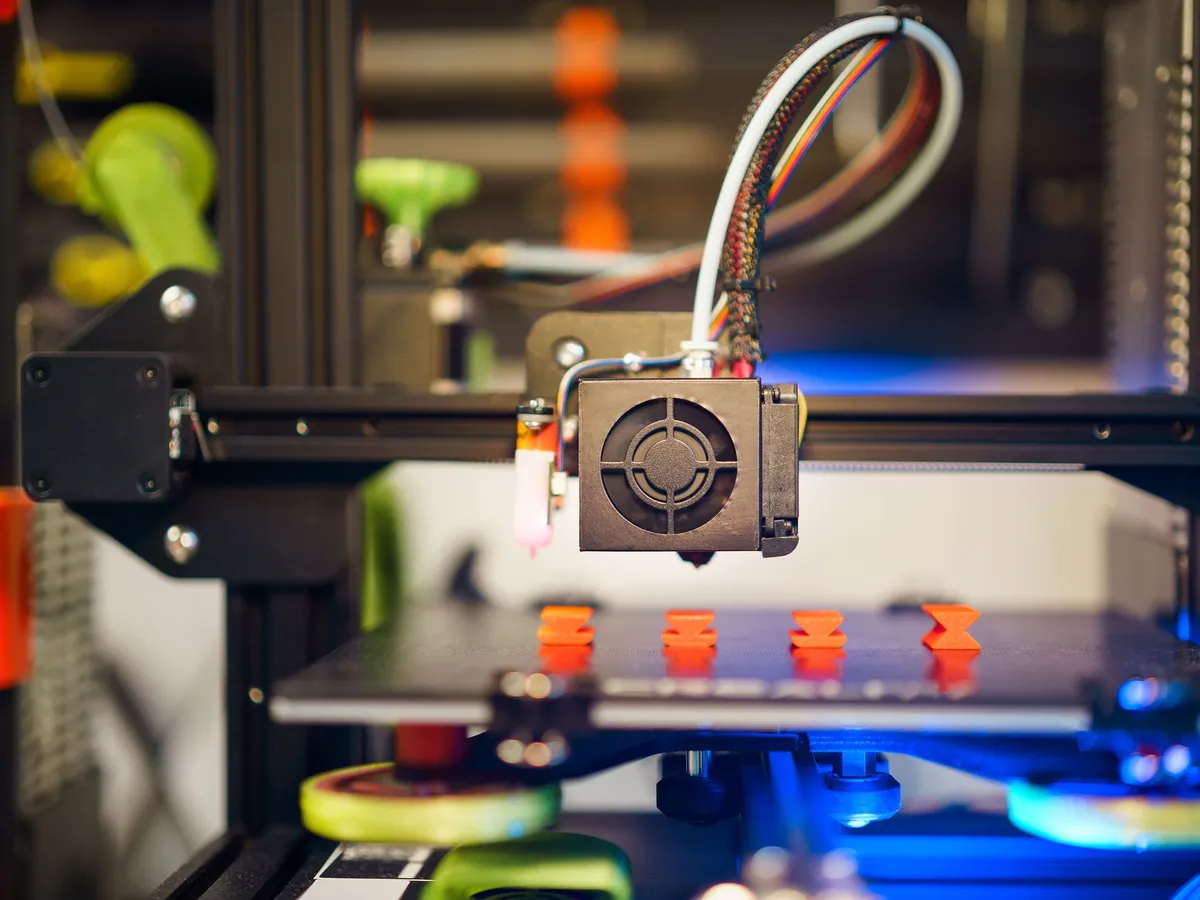
Purchase Price Tiers
These are the prices on the manufacturers’ official US store pages in early October 2026. Bambu Lab shows “from” prices on its collection page, and Prusa’s prices were read with the USD currency selected, so the total at checkout may differ with your ship-to country.
| Tier | Printer | Price |
|---|---|---|
| Entry | Elegoo Neptune 3 Pro | $179 |
| Entry | Creality Ender-3 V3 SE | $199 |
| Entry | Bambu Lab A1 mini | from $219 |
| Entry | Elegoo Neptune 4 Pro | $229 |
| Mid | Elegoo Centauri 2 | $279 (list $299) |
| Mid | Creality SPARKX i7 | $279 |
| Mid | Bambu Lab A1 | from $299 |
| Mid | Elegoo Centauri Carbon 2 | $349 ($399 combo) |
| Mid | Creality K1C 2025 | $369 |
| Mid | Bambu Lab P1S | from $399 |
| Mid | Creality K2 | $399 (was $549) |
| Upper | Bambu Lab P2S | from $549 |
| Upper | Prusa MINI+ | $549 |
| Upper | Bambu Lab X2D | from $649 |
| Upper | Creality K2 Pro | $799 |
| Premium | Prusa MK4S | $999 assembled, $709 kit |
| Premium | Prusa CORE One+ (Gen 2) | $1,299 assembled, $999 kit |
| Premium | Creality K2 Plus Combo | $1,199 |
| Premium | Prusa CORE One L+ | $1,999 |
| Premium | Prusa XL+ | $2,299 |
Two details change the real price. Bambu’s store also lists refurbished units: a P2S at $637 against $749 new, an X1C at $649 against $1,249 new, and an H2D at $1,469 against $1,749 new. Prusa sells several models as kits at lower prices than assembled, which swaps money for build time.
Enclosure matters too. Bambu’s P1S page calls it a “High-Speed Enclosed 3D Printer” and Prusa’s CORE One+ page says “Fully-enclosed CoreXY”. We did not verify prices for standalone enclosures, so we leave them out. Both of those sit in the $399 and up range, so if you want an enclosed printer, expect to pay more than the entry tier.
Filament: The Biggest Running Cost
Most printers use 1.75 mm filament sold in 1 kg spools. Prices we read on official store pages in October 2026:
| Filament | Price | Source |
|---|---|---|
| Bambu PLA Basic, 1 kg | $15.99 | Bambu store, MSRP |
| Bambu PLA Basic, 10+ rolls | $11.19 per roll | Bambu store |
| Bambu PLA Matte or Silk+ | $11.19 | Bambu store |
| Bambu PETG Basic | $9.79 after bulk sale | Bambu store |
| Elegoo PLA Basic | from $13.49 | Elegoo store |
| Elegoo PLA | from $13.99 | Elegoo store |
| Elegoo PLA Plus | $14.99 | Elegoo store |
Bambu lists multi-roll discounts of 5%, 10%, 15% and 30% at 2, 4, 6 and 10 rolls. Elegoo’s spool size depends on the variant, so check the weight before comparing. Using the $11.19 to $15.99 range, our arithmetic gives the cost per print:
- A 50 g part costs about $0.56 to $0.80 in filament.
- A 100 g part costs about $1.12 to $1.60.
- A 1 kg spool is about 10 prints of 100 g.
Supports and failed prints add waste, so treat the per-print figures as a floor. We have not measured waste rates.
Electricity: Cheap, but Do the Math
Bambu’s P1S page lists electrical requirements of 350 W at 110 V and 1,000 W at 220 V. That is a peak figure, because heaters draw most of it while the bed and hotend warm up. Average draw during a print is lower. We assume 100 W as an average for the cost estimate (our assumption, not a measurement; a plug-in meter will tell you for your machine).
The formula is kW x hours x $0.1831:
| Draw | Cost per hour | 520 hours a year (10 hours a week) |
|---|---|---|
| 100 W average (our assumption) | 1.8 cents | 52 kWh, about $9.52 |
| 350 W peak, held all print | 6.4 cents | 182 kWh, about $33.32 |
A four-hour print therefore costs about 7 cents at 100 W and about 26 cents at a constant 350 W. In Hawaii, where the rate is about 48 cents per kWh, the 100 W case costs about $25 a year (our arithmetic). Standby adds little: our vampire power guide puts a 3 W printer in standby at about $4.81 a year, so switch it off at the wall if it sits idle for weeks. For rates by state, see our average electric bill by state guide, and for a quick comparison with other gear see our appliance electricity cost guide and the gaming PC electricity guide.
Nozzles and Parts
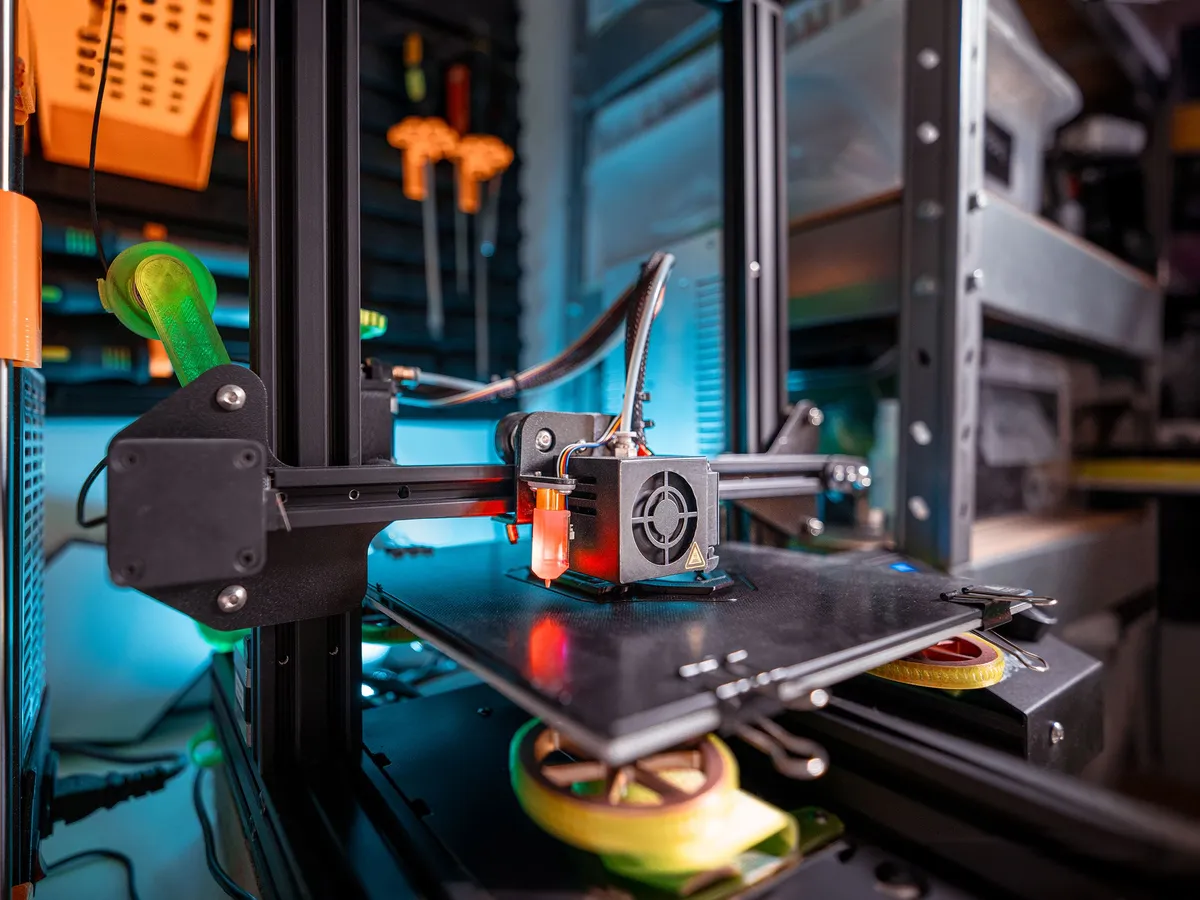
Bambu’s store search shows hotend prices: A1 and A2 hotends from $9.99, P1-series from $14.99, X1C from $14.99, H2, P2S and X2D from $17.99, and a tungsten carbide option from $59.99. We found no official nozzle lifespan, so the replacement rate is our estimate: one hotend a year at about $10 to $15 for a hobbyist printing PLA. Abrasive filaments wear nozzles faster, which is where the harder-metal options earn their price. Other consumables, such as build plates, lubricant and belts, we did not price.
Putting It Together: Our 3-Year Estimate
The yearly running cost uses 10 kg of filament a year (our assumption, equal to about 100 prints of 100 g), electricity and one hotend:
- Low case: 10 kg at $11.19 = $112, plus $9.52 power, plus $10 hotend = about $131 a year.
- High case: 10 kg at $15.99 = $160, plus $33.32 power, plus $15 hotend = about $208 a year.
| Printer | Price | 3-year total, low | 3-year total, high |
|---|---|---|---|
| Bambu Lab A1 mini | $219 | about $613 | about $844 |
| Bambu Lab P1S | $399 | about $793 | about $1,024 |
Printing half as much roughly halves the filament line, and printing double the hours doubles it. The purchase price stops mattering after a year or two; filament is the cost to manage. Our how-to-lower-your-electric-bill guide helps with the smaller power slice, and our electric bill estimator lets you add the printer to your own rate.
When Printing Beats Buying
Printing wins where the store price is high compared with the filament in the part. Here is a hypothetical to show the arithmetic, not a market price: if a replacement clip, bracket or organizer would cost $10 retail and you print it for about $1 in filament and a few cents of power, you save about $9. A $219 printer breaks even after about 25 such parts ($219 divided by $9). At two or three parts a month that takes under a year; at one part every few months it never does.
Printing loses when you need one item once, when the part must be strong, heat resistant or food safe (we did not test any of these), or when your time is worth more than the saving. Setup, learning and failed prints are real costs that this table leaves out.
The Bottom Line
Buy-in runs $179 to $2,299, and running cost is about $131 to $208 a year in our estimate, mostly filament. Electricity is about 2 to 6 cents an hour, so it will not decide your choice. Pick the cheapest printer that fits your parts, buy filament in multi-roll bundles when the discount applies, and count the number of parts you would really print before you commit. Our methods are in how we estimate costs.
FAQ
How much does a 3D printer cost in 2026?
From the official US stores in October 2026, entry printers run $179 to $229, mid-range models $279 to $549, and premium Prusa machines $999 to $2,299. Bambu Lab shows “from” prices, and Prusa prices can shift with your shipping country.
How much does 3D printer filament cost?
About $11.19 to $15.99 per 1 kg spool for Bambu PLA, and from $13.49 for Elegoo PLA Basic, according to their stores in October 2026. That is about $0.56 to $0.80 of filament for a 50 g part (our arithmetic).
How much electricity does a 3D printer use?
Bambu’s P1S page lists 350 W at 110 V as the electrical requirement. We assume an average of 100 W while printing, which costs about 1.8 cents an hour at 18.31 cents per kWh, or about $9.52 for 520 hours a year. At a constant 350 W it would be about $33.32.
Is it cheaper to 3D print than to buy?
Only for parts where the retail price is much higher than the filament. In our hypothetical, a $10 part that costs about $1 to print saves $9, so a $219 printer pays back after about 25 parts. For single, one-off items, buying is usually cheaper.