
Replacing the ductwork in a whole house costs $3,000 to $9,000 on average, with contractors pricing it at roughly $30 to $45 per linear foot installed. A 2,000 sq ft two-story with 150 to 200 linear feet of duct lands in the $5,000 to $8,000 range once registers, boots, and sealing are included. Small ranches with an open crawlspace can come in under $3,500; houses with buried or inaccessible ducts can pass $12,000.
Duct pricing is famously inconsistent, and that’s not entirely the contractors’ fault. Two companies can look at the same house and legitimately plan different amounts of demolition, insulation, and access work. The sections below break the number apart so you can tell a thorough quote from a padded one.
What Drives the Price
| Cost factor | Typical range | Why it matters |
|---|---|---|
| Galvanized sheet metal duct | $12 - $25 per linear foot | Durable, lowest air leakage, best for main trunks |
| Flexible duct (flex) | $8 - $15 per linear foot | Cheap and fast, but drags airflow if sagged or kinked |
| Duct board / fiberglass duct | $10 - $18 per linear foot | Insulated by default, less common in new work |
| Accessible runs (crawlspace, open attic) | Base labor | Techs can work standing or crawling |
| Buried or enclosed ducts | +30% to 100% labor | Drywall or floor opening, then repair |
| Registers, grilles, boots | $25 - $75 each | A 10-room house has 12 to 16 of them |
| Sealing (mastic) and insulation wrap | $1 - $3 per linear foot | Should be standard, not an upgrade |
Material choice is the loudest argument in the room on many jobs. Sheet metal with mastic-sealed joints moves air with the least friction and lasts forty years, but it costs more in material and fabrication time. Flex is fast and cheap, which is why it dominates attics, but every sag and tight bend adds resistance, and a sloppy flex install quietly strangles a system that was sized correctly on paper.
Access is the cost driver people underestimate. Ducts in an open crawlspace get swapped in a couple of days. Ducts buried under a slab, or running through closed chases behind two floors of drywall, mean opening walls and patching them afterward, and the quote has to carry that.
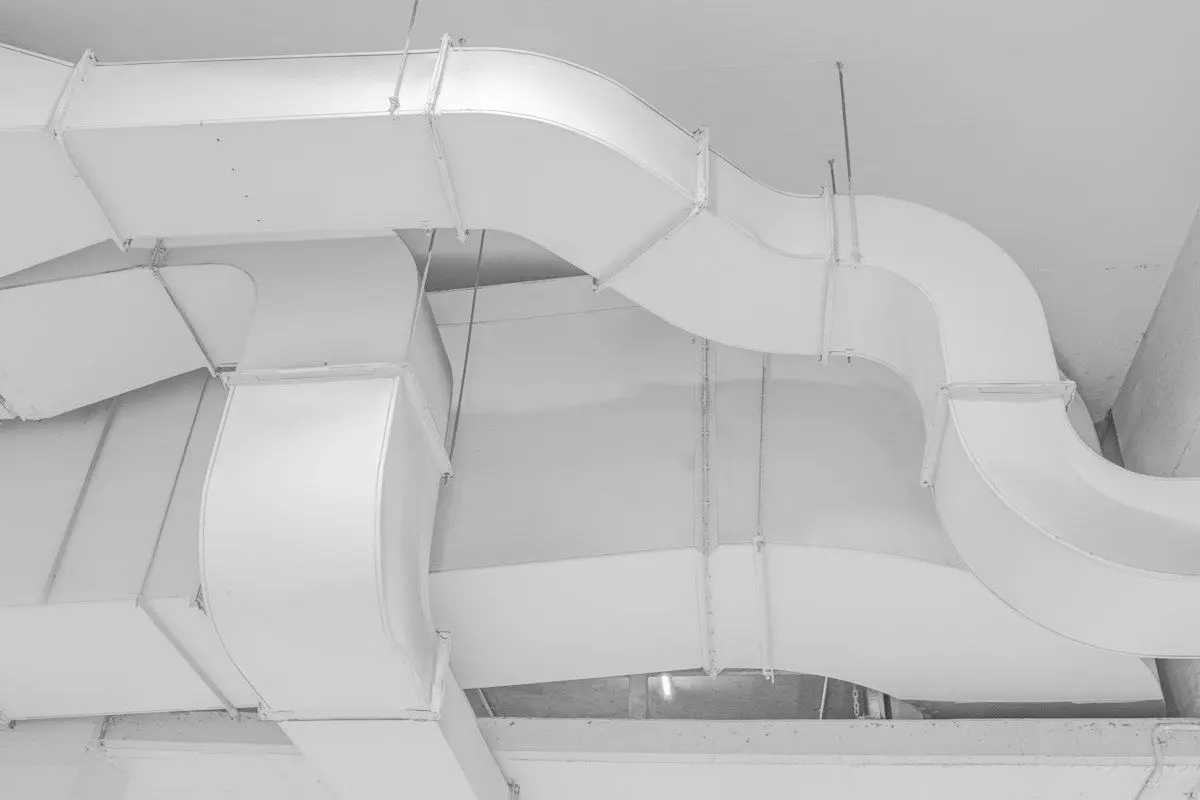
Three Real-World Scenarios
Single-story ranch, slab-on-grade in Georgia, ducts in the attic. About 140 linear feet of new flex with metal trunk lines, 11 supply runs and 2 returns. Materials $2,600, labor $1,900, registers and boots $600, sealing and insulation $350. Total: $5,450.
Two-story in Minnesota, ducts in finished walls and basement ceiling. Basement runs are easy; second-floor branches come through the basement ceiling instead of walls, avoiding drywall damage. About 190 linear feet of mostly metal duct. Materials $3,800, labor $2,900, registers $800. Total: $7,500.
1960s ranch with ducts buried under the slab, Arizona. The slab ducts are corroded and leaking. The contractor abandons the under-slab system and runs new overhead ducts through the attic. About 160 linear feet plus penetration and patching. Total: $11,800. Same square footage as the first house, twice the price, and the difference is entirely about access.
Why Quotes Vary So Wildly
Three estimates on the same house can legitimately span $4,000. One company plans to reuse your existing boots and registers; another replaces everything it touches. One price includes drywall patching; another hands you a paint-splattered house and a phone number for a drywaller.
There’s also the sizing question a lazy quote skips entirely. Ducts must be sized to the blower and the room loads, and a contractor who just “matches what’s there” is copying whatever mistakes the original builder made. Ask each bidder two questions: what diameter each trunk and branch will be, and how joints will be sealed. A contractor who answers both without hesitating has actually planned the job. One who says “we always do it the same way” hasn’t.
For calibration on whether the equipment-side number you’ve been given is fair, our central AC replacement cost guide pairs with this one, since duct and equipment jobs often get quoted together.
When Sealing Beats Replacing
Before you spend $6,000, check whether your actual problem is leaks rather than age. Duct systems routinely lose 20% to 30% of their air through seams, disconnected boots, and failed tape, and sealing those joints with mastic or aerosol sealing runs $500 to $2,500 for a whole house. If your ducts are metal, structurally sound, and just leaking at the joints, sealing recovers most of the performance for a tenth of the price.
The signs that point to sealing instead of replacement: rooms that are uneven but not hopeless, a system that runs constantly, higher-than-expected energy bills, and ductwork that’s 15 to 25 years old rather than 40. The signs that point to replacement: crushed or disconnected runs, rusted or crumbling board duct, rodent damage, and ducts so undersized the system never worked right from day one.
An honest contractor will test before recommending. A duct blaster or pressure pan test puts numbers on the leakage, and that test costs a few hundred dollars or is free with a quote. No test, no diagnosis, just a $9,000 number on a form? That’s a red flag worth comparing against our list of contractor quote red flags.
The Ductless Escape Hatch
If the duct quote is brutal and the ducts are the reason your house is uncomfortable, price the alternative: a ductless mini-split system. A two- or three-head setup for a 2,000 sq ft home typically runs $6,000 to $14,000 installed, which overlaps duct replacement costs but delivers new equipment with it rather than just new air pathways. We compare the full picture in mini-split vs. central air cost, and our mini-split cost guide covers single-zone pricing.
This isn’t the answer for every house, and resale buyers still expect central air in many markets. But on homes with unfixable slab ducts, or additions where extending ducts is impractical, going ductless beats paying five figures for access carpentry.
Mistakes That Cost Homeowners Money
- Replacing ducts without a load and duct calc. New ducts copied from old mistakes deliver new versions of the same problem.
- Going all-flex to save $800. Sagged, kinked flex in a hot attic chokes airflow and can erase the efficiency of brand-new equipment.
- Skipping the insulation spec. Attic ducts need R-8 wrap in most climates now. Uninsulated or thin-wrapped runs sweat in summer and waste heat in winter.
- Paying for drywall repair you didn’t need. Sometimes the second-floor plan can be rerouted through ceilings or a closet; ask before accepting cutting into finished walls.
- Believing “bigger ducts fix everything.” Oversized ducts lower air velocity, and low velocity means weak throw from the registers and rooms that never quite warm or cool.
Bottom Line
Plan on $3,000 to $9,000 for whole-house duct replacement, $30 to $45 per linear foot, with access and material choices doing most of the moving. Get a leakage test before committing, because sealing at $500 to $2,500 fixes a surprising share of duct complaints. And when the quote for access work gets ugly, price the ductless alternative before you sign.
FAQ
How long does ductwork replacement take?
One to three days for most homes. An accessible crawlspace or attic job often finishes in a single day; work requiring drywall opening, patching, and painting stretches to a week including repairs. Ask your contractor to separate the HVAC days from the repair days in the schedule.
Is it worth replacing old ductwork?
If ducts are leaking, crushed, rusted, or badly sized, yes, because no new furnace or AC can overcome bad air pathways. If ducts are intact but leaky, sealing at a tenth of the cost is usually the smarter first move. Test before deciding.
Can I replace ductwork myself?
Accessible attic or crawlspace runs are physically possible for a skilled DIYer, but sizing, sealing, and code requirements make it risky, and most jurisdictions require a mechanical permit. A botched install costs more to fix than a professional one costs up front. DIY sealing with mastic, on the other hand, is very reasonable.
Should ducts be replaced when replacing the AC?
Not automatically. If ducts are less than about 20 years old, sound, and sized correctly, reuse them and put the budget into better equipment. Replace when the ducts are the known problem, or when an equipment upgrade changes airflow needs enough that old trunks can’t serve it.