
A solar lease puts panels on your roof for little or no money down, and in EnergySage’s Massachusetts example it trims a $3,451 annual utility bill to about $2,761. Buying the same system costs far more upfront but keeps most of the savings. Which is better depends on your cash, your electricity rate, and how long you will stay in the house. Here is how the two compare in 2026, with the numbers that matter: monthly payments, annual escalators, and the sale of the home.

How Leases, PPAs and Ownership Differ
- Solar lease. EnergySage describes a fixed monthly payment based on the system’s estimated annual production, for example $230 a month.
- Solar PPA (power purchase agreement). You pay per kilowatt-hour the system produces, for example $0.24 per kWh.
- Buying (cash or loan). You own the system outright or finance it and own it.
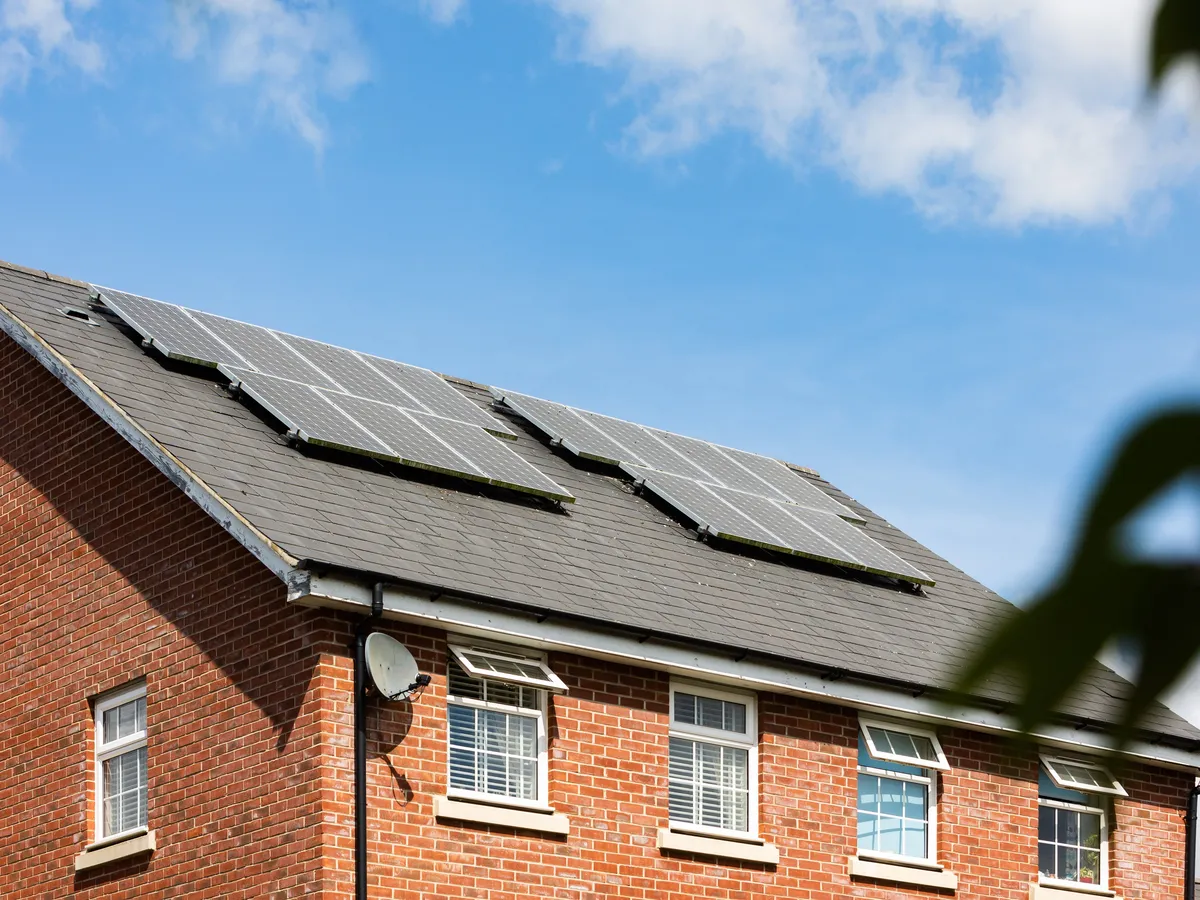
With a lease or PPA, a solar company installs and owns the panels. EnergySage says these contracts usually run 20 to 25 years. The U.S. Department of Energy’s homeowner guide adds that in many cases there is no money down, and that a purchased system can be installed at a lower total cost than one installed using a solar loan, lease or PPA.
The Cost Comparison in EnergySage’s Example
EnergySage’s lease page (updated February 11, 2026) uses a 10.5 kW system in Massachusetts: a $230 monthly lease payment, or a PPA at $0.24 per kWh, against annual utility costs of $3,451. Under either structure the annual cost is about $2,761, which is $690 a year less (our arithmetic), about 20% of the bill.
Now compare with buying. EnergySage lists a 10 kW system at $29,693 in Massachusetts. Scaled up to 10.5 kW, our arithmetic gives about $31,200. This table puts the two side by side in year one and over 25 years. It is our arithmetic and assumes flat rates, no escalator, no degradation, no maintenance and no inverter replacement, so it shows direction, not an exact result.
| Lease ($230/month) | Buy with cash (about $31,200) | |
|---|---|---|
| Upfront cost | none | about $31,200 |
| Year-one energy cost | about $2,760 in lease payments | about $0 (bill avoided) |
| Year-one savings vs $3,451 utility bill | about $690 | about $3,451 |
| Simple payback | not applicable | about 9 years |
| 25-year net, flat rates | about $17,250 saved | about $55,100 saved |
The lease wins on cash today. Buying wins on total savings, because the lease company keeps most of the value the panels create. That is the trade for owning nothing and paying nothing upfront. Our solar panel payback calculator lets you test your own price and rate.
Escalators Change the Picture
Leases and PPAs usually come with an annual price increase. EnergySage says escalators are typically 1% to 3% a year. Starting from the $230 payment in the example (our arithmetic):
| Annual escalator | Payment in year 10 | Payment in year 25 | Total over 25 years |
|---|---|---|---|
| 0% | $230 | $230 | $69,000 |
| 1% | $252 | $292 | about $77,950 |
| 2% | $275 | $370 | about $88,400 |
| 3% | $300 | $468 | about $100,600 |
If utility rates rise faster than the escalator, you keep a gap. If they rise slower, the lease can end up costing more than the electricity it replaces. Ask for the exact escalator and the payment schedule for every year before signing, and compare it against how fast your own utility’s rates have risen.
Tax Credits: Who Gets Them in 2026
This is not tax advice, only the status reported by the sources we checked.
- If you buy: The IRS says the Residential Clean Energy Credit applies to property installed from 2022 through December 31, 2025, and is not available for property placed in service after that date (IRS page updated July 4, 2026). A system installed in 2026 gets no federal credit.
- If you lease or sign a PPA: EnergySage reports that these systems can still qualify for commercial solar tax credits (Section 48 or 48E) when the project begins construction before July 2026. Utility Dive reported in September 2025 that projects starting construction later must be placed in service by the end of 2027. EnergySage says the provider may pass much of that value to you through lower payments, often around 30%. Whether it does is a term in your contract.
The commercial credit’s deadline is a risk to price. If your provider’s credit eligibility lapses, ask what happens to your rate. Third-party ownership already accounts for about 45% of residential installs, per Utility Dive (September 2025), so this market is large and the offers vary.
What Happens When You Sell the House
EnergySage says you can transfer the lease to the homebuyer or buy out the system and include it in the sale. The Department of Energy says third-party-owned systems add some complexity to a sale, but the overall impacts on sales price, time on market, agreement transfers and customer satisfaction are mostly neutral.
In practice, ask these questions before you sign:
- Can the buyer take over the contract, and what credit check does the company run?
- What is the buyout price in year 5, 10 and 15?
- Does the company file a lien or notice against the property, and who clears it at closing?
An owned system avoids the contract-transfer step entirely. See our guide on whether solar panels increase home value.
Who Should Lease
A lease makes sense if you cannot or do not want to spend $15,000 or more, you want a lower bill from day one, and the contract puts maintenance on the provider (confirm that in writing). It also suits people who expect to stay in the house for the long term, since a short stay means dealing with a transfer or buyout. It makes less sense if you can pay cash or finance cleanly, because ownership keeps more of the savings.
Who Should Buy
Buy if you have cash or good loan terms, expect to stay at least a decade, and live somewhere with high electricity rates. For a price benchmark, see our solar panel installation cost guide, and for sizing, see solar system cost by size. For storage, see solar battery cost.
Bottom Line
In EnergySage’s Massachusetts example, a lease saves about $690 a year with nothing down, while owning avoids the whole $3,451 bill after paying about $31,200 upfront (our arithmetic). Leases cost more over the long run, especially with a 2% to 3% escalator. Check the escalator, the buyout terms and the federal credit status before you sign, and get a cash quote to compare against.
FAQ
Is it better to lease or buy solar panels?
Buying keeps more savings over the system’s life, according to the sources above, and the DOE says a purchased system can be installed at lower total cost than a loan, lease or PPA. Leasing wins on upfront cost, since many leases need nothing down.
How much does a solar lease cost per month?
EnergySage’s example is $230 a month for a 10.5 kW system in Massachusetts. Your payment depends on system size and estimated production, and it can rise 1% to 3% a year with an escalator.
What is the difference between a solar lease and a PPA?
With a lease you pay a fixed monthly amount. With a PPA you pay per kilowatt-hour produced, so your bill moves with output. Both usually run 20 to 25 years, per EnergySage.
Can I get the federal tax credit if I lease solar?
The 30% homeowner credit is not available for property placed in service after 2025, per the IRS. Lease and PPA providers may still claim a commercial credit and, EnergySage says, may pass part of it to you. It depends on your contract.
What happens to a solar lease if I sell my home?
You can transfer it to the buyer, who is credit-checked, or buy out the system and include it in the sale, per EnergySage. Read the transfer terms before you sign.