
A 10 to 13.5 kWh home battery costs $10,000 to $16,000 installed in 2026, and that’s before any incentives, since the 30% federal credit that used to apply expired at the end of 2025. Here’s the honest part: in most states, the battery never pays for itself through bill savings alone. People buy them for blackout protection, and that’s a perfectly good reason once you price it honestly against the alternative, which is a standby generator.
What Drives the Price
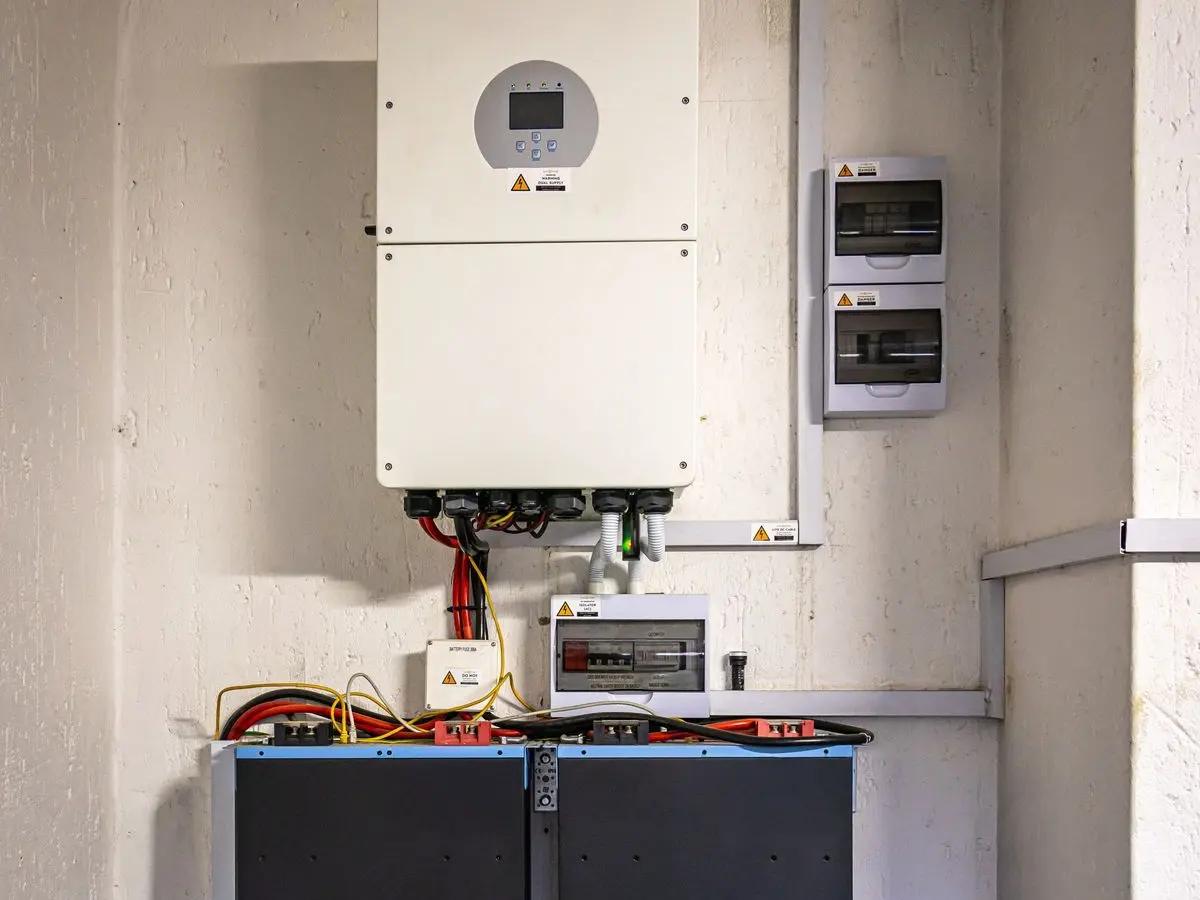
The battery module itself is less than half the bill. The rest is integration, electrical work, and margin.
| Cost component | Share of installed cost | Notes |
|---|---|---|
| Battery module(s) | 45-55% | LFP chemistry is standard now |
| Inverter or gateway hardware | 10-15% | Higher if the battery is AC-coupled to an old solar setup |
| Transfer equipment and electrical work | 10-15% | Whole-home backup costs more than loads-panel backup |
| Labor | 10-15% | Usually one to two crew-days |
| Permitting and inspection | 3-5% | Fire-code setbacks apply in some cities |
| Installer overhead and margin | 10-15% | Negotiable, unlike hardware cost |
Two design choices swing the total more than brand does. Backing up the whole house requires automatic transfer equipment and sometimes a service upgrade, which pushes toward the top of the range. Backing up just a critical-loads subpanel, covering the fridge, lights, internet, and a few outlets, is cheaper and honestly what most households need. Stacking two batteries for 27 kWh doubles the module cost, so a two-battery home routinely lands at $22,000 to $30,000.
Why Bill Savings Rarely Pay for It
Battery arbitrage only works if your utility charges different prices at different hours. The play is simple: charge the battery when power is cheap, run the house from it when power is expensive, and pocket the spread.
In a flat-rate state, there is no spread. A flat rate of 14 cents means every kWh you cycle through the battery saves you roughly nothing, and the battery’s 90% round-trip efficiency means you actually lose a little. A full daily cycle of 13.5 kWh at a 3-cent spread might yield $130 a year. Against a $12,000 installed cost, that’s a 90-year payback. We’re not going to pretend that works.
Even in time-of-use states, the numbers need care. Take a plan with an overnight rate near 12 cents and a peak rate near 45 cents. A full daily cycle saves roughly $3.50 to $4, or about $1,300 a year, which pays back a $13,000 battery in about 10 years if you cycle it perfectly every single day. Real households don’t, especially outside summer. Add degradation and the payback stretches past the warranty period. That doesn’t make the battery a bad purchase. It makes it a purchase you should justify on something other than savings.
Where Batteries Actually Make Financial Sense
Three markets earn the title. California, under its NEM 3.0 net billing rules, pays new solar owners near-wholesale rates for exported power but charges 35 to 50 cents per kWh during evening peaks. A battery lets you store midday solar and eat your own expensive power instead of selling it for a nickel, which is why most new California solar quotes now include one.
Second are time-of-use markets with genuinely brutal peaks, parts of Massachusetts, New York, and Arizona’s summer peak plans among them. If your rate plan has a 3x or better peak-to-off-peak spread and you can shift real load, the arbitrage math starts to close.
Third are markets with strong state storage incentives, which change often. Check dsire.org for current programs before you assume the payback math above applies to you.
Outage Protection Is the Real Reason People Buy
Ask battery owners why they bought and the answer is rarely “savings.” It’s the multi-day outage, the freezer full of food, the home office, the medical equipment, or just not sitting in the dark.
Price the alternative honestly. A 14 kW standby generator runs $12,000 to $17,000 installed, needs gas or propane, annual maintenance, and makes noise you’ll hear from indoors. A battery switches over instantly and silently, needs no fuel, and covers an essential-loads setup for days. If your grid is unreliable, comparing the battery to a generator is the fairest test, and sometimes the battery wins even with zero bill savings. If your outages average one uncomfortable afternoon a year, be honest with yourself about what that’s worth.
Stacking With Solar
Batteries and solar fit together, but the value depends on your billing rules. Under old full-retail net metering, batteries added little because the grid effectively acted as your battery. Under net billing or time-of-use rates, the battery captures value the grid no longer pays for.
If you’re installing both together, one integrated system costs less than retrofitting later, because you share labor, permitting, and inverter hardware. Our solar panel installation cost guide covers the combined budget picture. If you already have solar, ask specifically for AC-coupled options and whether your existing inverter supports battery integration, because retrofit costs vary a lot by original equipment.
One planning note for future sellers: owned solar-plus-battery systems generally appraise better and transfer cleaner than leased ones, which we cover in do solar panels increase home value.
Lifespan and Degradation
Modern lithium iron phosphate batteries carry 10-year warranties, and the warranty terms tell you what to expect. Most guarantee about 70% capacity at year 10, plus a cycle or throughput cap, whichever comes first. Expect roughly 2 to 3% capacity loss in the early years and slower decline after.
Plan on the battery being a 10-to-15-year asset, not a 25-year one like the panels. A unit cycled daily degrades faster than one cycled a few times a week. At year 10, when the warranty ends, you’ll decide between living with reduced capacity and paying for replacement or refurbishment. Budget that future cost mentally now: a battery bought in 2026 will likely need a replacement decision right around 2036.
How to Pay Less
Get three quotes, same as solar, and confirm each quote states whether backup is whole-home or critical-loads. That single line item explains most price gaps between bids that look identical.
Consider a smaller battery plus load management over a bigger battery. Smart panels can shed the water heater and EV charger during an outage automatically, so a 10 kWh unit covers a house that would otherwise “need” 20. Also price the off-peak-charging configuration even without solar; some installers default to solar-only charging, which limits arbitrage.
If a lease or subscription deal for a battery shows up, read the escalator clause with the same suspicion you’d give a solar lease. And when quotes reference incentives to shrink a monthly payment, verify each program on dsire.org yourself. A quote leaning on expired programs is one of the contractor quote red flags we tell every homeowner to watch for.
Bottom Line
Budget $10,000 to $16,000 installed for a quality 10-13.5 kWh battery, more for whole-home backup or two units. In most states the purchase stands on outage protection, not bill savings, and pretending otherwise is how people end up disappointed. Buy if blackouts cost you real money or comfort, or if you live in a time-of-use or net-billing market where the spread genuinely pays. Skip it if your grid is reliable and your rates are flat.
FAQ
Is a home battery worth it without solar?
Sometimes. On bill savings alone, almost never, because flat rates offer no arbitrage spread. As backup, it competes directly with a $12,000 to $17,000 standby generator, and it wins on fuel, noise, and maintenance. If your utility’s rate plan has a strong peak-to-off-peak spread, add the savings on top.
How long can a battery power a house?
A single 13.5 kWh battery running only essentials, fridge, lights, internet, phone charging, typically lasts one to three days. Add air conditioning and you’ll drain it in hours. That’s why critical-loads backup design matters more than battery size.
What is the lifespan of a solar battery?
Plan on 10 to 15 years, with most warranties covering 10 years to about 70% capacity. Daily cycling shortens life; occasional cycling extends it. Unlike panels, batteries are a mid-life replacement item, so expect one replacement decision over the life of your solar system.
Do batteries qualify for any tax credits in 2026?
The federal 30% residential credit expired December 31, 2025 and has not been replaced. Some state and utility storage incentives still exist and change frequently. Check dsire.org for your state before buying, and don’t rely on a salesperson’s summary of what qualifies.