
Replacing the gutters on a typical home costs $1,100 to $3,200 installed, based on aluminum at $6 to $14 per linear foot plus downspouts. A single-story house with about 160 feet of gutter usually lands near $1,400 to $1,900, while a two-story with 200 feet and buried drains can pass $3,500. Material choice matters less than people think: height, labor, and how water gets away from the foundation move the total more than the metal does.
What Actually Drives the Price
| Cost component | Typical range | Notes |
|---|---|---|
| Seamless aluminum, 5” or 6” K-style | $6 - $14 per linear ft | The default on most homes |
| Sectioned vinyl or aluminum | $3 - $9 per linear ft | DIY and handyman territory |
| Galvanized steel | $9 - $16 per linear ft | Sturdier, heavier to work |
| Copper | $25 - $45+ per linear ft | Historic homes and statement budgets |
| Downspouts | $5 - $12 per linear ft | Or $50 - $150 each on simple jobs |
| Old gutter removal and haul-away | $1 - $2 per linear ft | Sometimes bundled, sometimes not |
| Fascia repair | $4 - $8 per linear ft | Charged only where wood is rotten |
| Buried drain pipe | $10 - $25 per linear ft | Trenched to a pop-up emitter or daylight |
Two multipliers sit on top of the table. Height: second-story work runs 15 to 30 percent more because of staging and slower, safer ladder practice. Size: 6-inch gutters cost modestly more per foot than 5-inch, and manufacturer specs commonly credit them with around 40 percent more water capacity, which is cheaper than adding a second downspout run on a big roof.
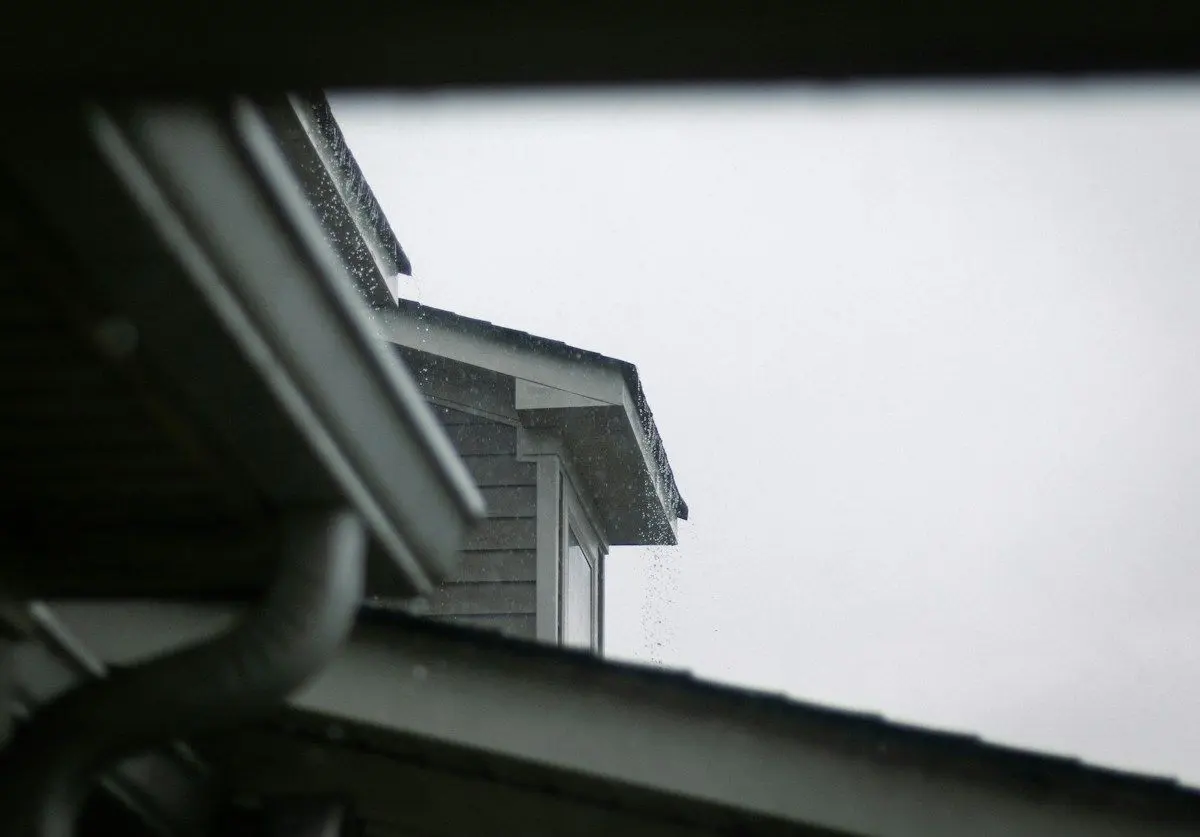
Sectioned vs. Seamless
Sectioned gutters come in 10-foot lengths from the hardware store and join at seams every few feet. Every seam is a future leak, held by brackets and sealant that expand and contract with every temperature swing. Sectioned vinyl at $3 to $6 per foot is the cheapest way to move water off a roof, and it’s also the system you’ll be re-sealing within a few years.
Seamless gutters are roll-formed on site from a truck-mounted machine, one continuous piece per run, with joints only at corners and downspout outlets. Fewer joints means fewer leaks, which is why seamless aluminum is the standard on professional installs. The catch is that the machine comes with the crew, so seamless is not a DIY product no matter how handy you are.
For most homes the decision isn’t close. Sectioned makes sense for sheds, garages, and tight budgets on single-story homes you maintain religiously. Everywhere else, the extra dollar or two per foot for seamless is the cheapest reliability on the whole invoice.
Gutter Guards: The Honest Take
Guards reduce cleaning. They don’t eliminate it. Every type still passes some debris or catches some on top, and the “install it and never think about your gutters again” pitch is exactly why guard complaints exist. Plan on a light rinse or brush-off every year or two regardless of what you buy.
What actually performs:
- Micro-mesh guards, $4 to $12 per foot installed, block nearly everything, including shingle grit and pine needles, and they’re the only type worth paying real money for. Two honest caveats: fine mesh can shed water sideways in a downpour if it isn’t pitched correctly, and it needs an occasional surface brush where maples and oaks drop seeds and helicopters.
- Brush and foam inserts, $2 to $5 per foot, sit inside the channel. Debris sits on top of them, roots grow into the foam, and you end up pulling them out to clean anyway. We’d skip them.
- Snap-on plastic screens, $1 to $3 per foot, warp within a couple of seasons and pop loose. Better than nothing for an autumn or two, and not for long.
One more honesty check: guards earn their keep on houses under heavy tree cover. On an open lot with no overhanging limbs, plain gutters cleaned once a year are cheaper and perfectly adequate, and guards can be added later if the trees grow in.
Downspouts and Getting Water Away From the House
Gutters are half the system, and discharge is the other half. The common failure isn’t the gutter itself, it’s water dumping beside the foundation for ten years straight. Plan on one downspout per 30 to 40 feet of gutter, and more on large roof planes.
The add-ons worth pricing: splash blocks at $15 to $40 each, above-ground extensions at $20 to $60, and buried 4-inch drain pipe at $10 to $25 per foot trenched to daylight or a pop-up emitter. On a two-story with planting beds against the foundation, a buried drain run often adds $500 to $1,200 to the job, and it’s frequently the best dollar on the whole invoice.
A Real-World Example
Two-story colonial, 1,900 sq ft, in Ohio. About 190 feet of gutter run and four downspout drops totaling 70 feet. Seamless 5-inch aluminum at $8.50 per foot is $1,615. Downspouts at 70 feet × $9 is $630. Removal and haul-away at $1.25 per foot is $240. Sixty feet of fascia repair at $6 per foot is $360. Two splash blocks and assorted hidden hangers add $120. Total: $2,965. Quotes for this exact house ranged from $2,400 to $3,800, and the high bid bundled micro-mesh guards onto every run.
DIY vs. Hiring It Out
Sectioned vinyl and aluminum are genuinely DIY-able: a weekend, a helper, $400 to $900 in materials for an average single story, and careful attention to slope. Gutters need roughly a quarter inch of fall per 10 feet toward the downspout. Get the slope wrong and water sits, and standing water defeats the entire purpose.
Seamless requires the roll-forming truck, so it’s pro-only. Two stories up, we’d hire it out regardless of material: gutter work means hours on a ladder at the worst possible working angle, and that’s precisely where home ladder accidents happen. The labor line on a professional quote buys the crew’s equipment, speed, and insurance, and on this particular job it’s money well spent.
How to Pay Less
- Book it late fall or early spring. Gutter crews are slowest after leaf season ends and before spring rains, and 10 to 20 percent off-peak discounts are common.
- Get a bid from an independent sheet-metal shop, not just the national gutter chains. Same machine, same coil stock, often hundreds less on an identical house.
- Skip guards on install day. Live with the new gutters through one full autumn first. If cleaning turns out to be miserable, add micro-mesh then, and buy it with real knowledge of where your trouble spots are.
- Bundle with a reroof if one is coming. Doing gutters during the same mobilization as new shingles saves a second trip charge. Our asphalt roof replacement cost guide shows how that job is priced line by line.
Mistakes That Cost Homeowners Money
- Too few downspouts. A long run pushing water 40-plus feet to one outlet overflows in any real storm. Adding an outlet on install day is cheap; retrofitting one later is a headache.
- Dead-flat runs. No slope means standing water, mosquitoes, winter ice, and seams that fail early. Check the fall with a level before you release final payment.
- Hanging new gutters on rotten fascia. They pull out within a couple of seasons. Fix the wood while the old gutters are off and the board is exposed.
- Buying the “lifetime, never clean” guard package. Guard add-ons are where gutter companies make their margin. Buy gutters first, guards later if the trees demand them.
Gutter care belongs in your yearly plan either way. Our annual home maintenance budget shows where this job fits alongside the rest of the house.
Bottom Line
Budget $6 to $14 per linear foot for seamless aluminum, count your feet honestly including the garage, and plan on $1,100 to $3,200 for most homes. Go seamless over sectioned, add micro-mesh only if trees demand it, and get water discharged well away from the foundation. Gutters fail quietly, and the damage surfaces at the fascia and the footer, so this small job is worth doing right the first time.
FAQ
How long do aluminum gutters last?
Seamless aluminum typically lasts 20 to 30 years, sometimes longer in mild climates with free-flowing water. The failure points are sealant at corners and outlets, hangers working loose, and dents from ladders and storms. Vinyl lasts 10 to 20 years but turns brittle; galvanized steel outlasts aluminum but rusts at scratches.
Are gutter guards worth the money?
Sometimes. Micro-mesh is worth it on houses under heavy tree cover, where it turns a twice-a-year climbing chore into a light annual rinse. On open lots it’s usually money spent solving a problem you don’t have. No guard eliminates cleaning, and anyone promising that is selling, not informing.
What size gutters do I need?
Most homes use 5-inch K-style, and it handles typical roof planes fine. Step up to 6-inch if the roof is large or steep, if long runs feed single downspouts, or if big trees overhang the house. Six-inch moves substantially more water and resists overflow in cloudbursts, and the upcharge on install day is small.
Can I replace gutters myself?
Sectioned vinyl or aluminum, yes, on a single-story home, with a helper and a weekend. Seamless is impossible without the roll-forming truck, so it’s professional-only. Two stories and up, we’d leave it to crews with staging and insurance no matter the material, because the fall risk isn’t worth the savings.