
Repiping a whole house costs $6,000 to $15,000 with PEX in most single-family homes, and $10,000 to $20,000 or more with copper. A 1,600 square foot single-story with two baths sits near the low end of the PEX range. Two stories, slab foundations, and plaster walls push the same job past $15,000. Labor dominates the bill either way; the pipe itself is rarely the expensive part.

What Drives the Price
Access is the biggest variable. Every foot of old pipe has to come out or get abandoned in place, and every new run has to get somewhere. A house on a crawl space lets crews work underneath with minimal wall damage. A slab foundation forces routing through attics or chased walls, which means more holes and more patching. Two-story homes add 30 to 50 percent because crews work from ladders and cut through finished ceilings.
| Cost item | Typical range | What moves it |
|---|---|---|
| PEX pipe and fittings | $1,000-$3,500 | Home-run manifolds cost more than trunk-and-branch |
| Copper pipe and fittings | $4,000-$8,000 | Copper prices swing with the commodities market |
| Labor | $4,000-$9,000 | Two to three techs for two to five days |
| Drywall cutting and patching | $800-$3,000 | Some quotes exclude it entirely; ask |
| Fixture reconnection and shutoffs | $300-$900 | New angle stops at every fixture add up |
| Permit and inspection | $200-$600 | Usually required for whole-system work |
| Paint or texture repair | $500-$2,000 | Often excluded; DIY painting saves this |
Drywall responsibility is where quotes quietly differ by thousands. One plumber includes patching and texture, the next leaves open holes and a phone number for a drywall contractor. Put both quotes side by side on that single line before comparing anything else.
PEX vs. Copper: Where the Money Goes
PEX has won most residential repipes on price, and the gap isn’t close. The tubing itself costs a fraction of copper, fittings are cheaper, and installs run faster because PEX bends around corners instead of requiring soldered joints at every turn. A crew can rough in PEX for a two-bath house in two days; the same house in copper takes three to four.
Copper still has its believers, and the case is real: it holds value at resale, handles UV and outdoor exposure, and has a century-long track record. If you’re keeping the house for decades and can absorb the premium, it’s a legitimate choice. For most owners, PEX delivers the same water at 40 to 60 percent less cost. Expect a 25-year-plus warranty on quality PEX installations and similar coverage on copper work.
Signs You Actually Need a Repipe
Three situations justify the spend. First, polybutylene pipe: gray plastic tubing installed roughly between 1978 and 1995, identifiable by stamped “PB” on the pipe. It degrades from the inside out and fails without warning, which is why many insurers refuse or surcharge coverage on it. If you have it, repipe on your schedule, not after a burst line floods the house.
Second, chronic leaks in otherwise ordinary pipe. Two or more pinhole leaks within a few years means the pipe is failing progressively, and each repair visit costs $300 to $600 while the clock keeps running. Third, galvanized steel at end of life: fifty-plus-year-old pipe corrodes from the inside, narrowing the bore until showers turn into trickles. Rusty water, pressure that fades when a second fixture opens, and decades-old steel are the tell. Sometimes the problem isn’t the whole house though; a failing service line from the street mimics these symptoms, and that’s a $2,500 to $7,500 job covered in our water main line replacement guide.
Real-World Repipe Scenarios
Scenario 1: 1,600 sq ft single-story slab home, two baths, PEX. Crew routes through the attic, abandons old copper in the slab. PEX materials at $1,800, labor at $5,200, drywall patching at $1,400, permit at $300. Total: about $8,700. This is the most common residential repipe in the Sun Belt.
Scenario 2: same house, copper instead. Materials jump to $6,500, labor to $6,500 because soldering takes longer, drywall and permit unchanged. Total: about $14,700. Six thousand dollars buys you metal the next buyer may never ask about.
Scenario 3: 2,800 sq ft two-story, three baths, PEX. Two crews, four days, more wall penetrations. Materials at $3,200, labor at $8,600, drywall at $2,400, permit at $400. Total: about $14,600. Past 3,000 square feet or four baths, quotes regularly clear $18,000.
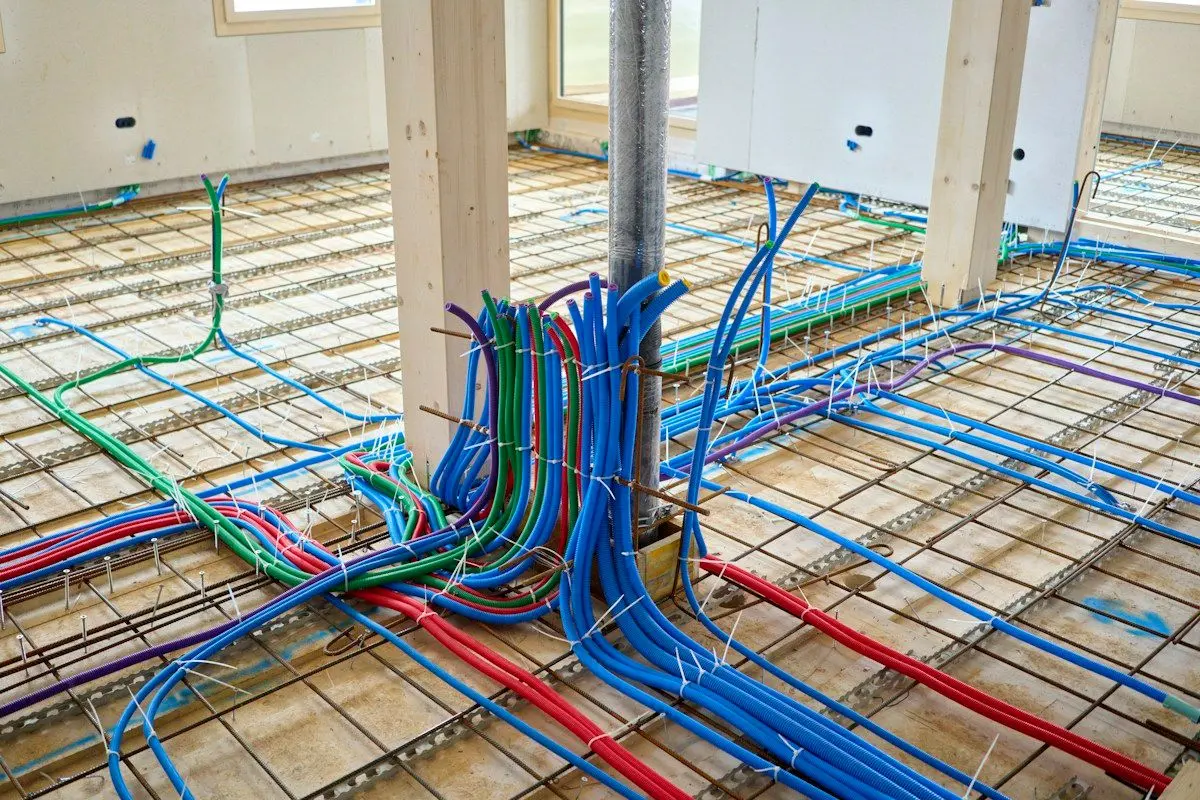
What a Repipe Quote Should Include
A complete quote lists pipe material and size, the routing plan, permit costs, drywall patching scope, insulation of new lines, and reconnection of every fixture including hose bibs. It should state whether texture and paint are included, name the warranty on labor in writing, and commit to a daily cleanup standard.
Quotes that just say “repipe house: $9,500” hide exactly the items that become change orders. We keep a running list of the worst patterns in contractor quote red flags, and vague repipe bids appear on it constantly. Compare three bids line by line, not by total.
Ways to Pay Less
Choose PEX unless you have a specific reason not to. The savings versus copper fund the drywall repair twice over in most homes.
Ask for patch-only drywall scope. Patching is cheap to include; texture matching and painting are where quotes grow. Handling the final paint yourself saves $800 to $2,000 on a typical job.
Schedule in the off-season. Repipe crews are busiest during freeze-damage season and summer peak. A winter booking in a mild market can shave several hundred dollars.
Get three bids on one written spec. Repipe pricing varies more than almost any plumbing job because scope interpretation varies. Identical houses regularly draw bids $4,000 apart, and only a line-item comparison shows why.
Mistakes to Avoid
Repiping without a pressure test plan invites callbacks. The system should be tested at rough-in and again before walls close. Ask when the inspection happens; a rough-in inspection before patching is standard practice in most jurisdictions.
Paying for a whole-house repipe when only the service line is failing happens more than you’d think. If pressure is low everywhere but the house has newer distribution pipe, the problem may sit between the meter and the house.
Finally, don’t leave fixture shutoffs out of scope. A repipe is the one moment replacing corroded angle stops costs almost nothing, because the system is already drained. Adding them later means another shutdown and another service call.
Bottom Line
Expect $6,000 to $15,000 for a PEX repipe and roughly double that for copper, with access and drywall scope swinging the number more than pipe choice does. Confirm polybutylene or end-of-life galvanized before committing, then compare three line-item bids with drywall responsibility spelled out. Done right, a repipe is a once-per-ownership fix that ends leak anxiety for decades.
FAQ
How long does a whole-house repipe take?
One to two days for a small single-story with PEX, up to five days for a large two-story. Water is typically shut off during work hours and restored each evening on most jobs. Drywall patching and paint add a few days after the plumbing passes inspection.
Is PEX repiping reliable?
Yes, when installed correctly with proper support and pressure testing. Quality PEX carries multi-decade warranties and has decades of field history in North America. The failures we hear about trace back to bad fittings or rodent damage, not the tubing itself.
Can I repipe a house myself?
A skilled DIYer can handle sections, but a whole-house repipe involves permit, inspection, soldering or crimping skill, and drywall reconstruction across the entire home. Most owners hire it out. A botched repipe can flood a house while you’re at work.
Does a repipe increase home value?
Modestly. Buyers and inspectors discount homes with polybutylene or failing galvanized pipe, so a repipe removes a deal-killer more than it adds a premium. Think of it as protecting your sale price, and budget the $6,000 to $15,000 accordingly.