
A gaming PC built from new parts on October 6, 2026 costs about $1,394 for 1080p, about $1,904 for 1440p and about $2,989 for 4K, before a monitor, Windows license or peripherals. Add three years of electricity and the totals reach roughly $1,544, $2,265 and $3,640. Those figures are our arithmetic from the lowest new, US-shipped Newegg listings we read that day, with the electricity estimates built on the wattage assumptions in our gaming PC electricity cost guide. Memory is the part that has changed most: a 32 GB DDR5 kit alone is now about 24% of a 1440p build.
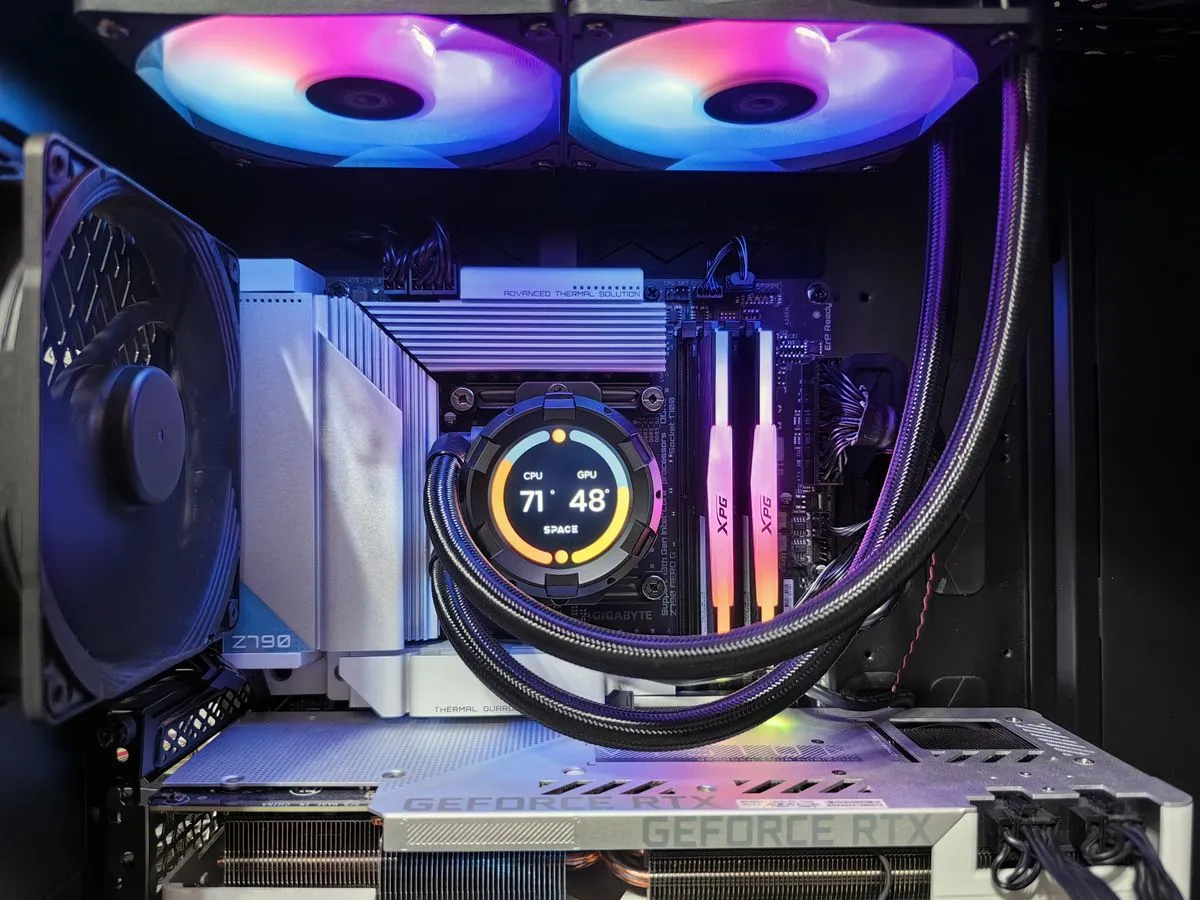
The Three Builds, Part by Part
All three use the AMD AM5 platform and a basic tower air cooler. The tier labels are our own judgment about which graphics card suits which resolution, not a benchmark result. Prices are the cheapest new listing we found per part, and listings move daily.
| Part | 1080p build | 1440p build | 4K build |
|---|---|---|---|
| Graphics card | Radeon RX 9060 XT 16GB, $519.99 | Radeon RX 9070 XT 16GB, $819.99 | GeForce RTX 5080 16GB, $1,679.99 |
| CPU and B850M motherboard (combo) | Ryzen 5 9600X, $314.99 | Ryzen 5 9600X, $314.99 | Ryzen 7 9800X3D, $539.99 |
| Memory | 16GB DDR5-6000, $259.99 | 32GB DDR5-6000, $459.99 | 32GB DDR5-6000, $459.99 |
| 1TB NVMe Gen4 SSD | $149.35 | $149.35 | $149.35 |
| Power supply | 750W 80+ Gold, $69.99 | 850W 80+ Gold, $79.99 | 850W 80+ Gold, $79.99 |
| ATX mid-tower case | $49.99 | $49.99 | $49.99 |
| Tower air cooler | $29.54 | $29.54 | $29.54 |
| Parts total | $1,393.84 | $1,903.84 | $2,988.84 |
Sources: Newegg listings read on October 6, 2026. The graphics cards were the Sapphire Pulse RX 9060 XT 16GB, the ASRock Steel Legend RX 9070 XT and an MSI RTX 5080. The 9600X combo pairs the CPU with a GIGABYTE B850M Eagle WIFI6E board, which prices the board at about $120 against the $194.99 CPU-only listing (our arithmetic). The memory, SSD, power supply, case and cooler were Corsair, ADATA, Thermaltake and Super Flower listings.
We did not include a monitor, Windows license, keyboard, mouse or tax, because those vary too much to price fairly.
Where the Money Goes
The graphics card is the biggest line in every build, and its share climbs with the tier. By our arithmetic it is 37% of the 1080p build, 43% of the 1440p build and 56% of the 4K build. That is why a resolution jump costs so much: the rest of the PC barely changes between tiers, while the card price roughly doubles at each step.
| Share of parts total | 1080p | 1440p | 4K |
|---|---|---|---|
| Graphics card | 37% | 43% | 56% |
| Memory | 19% | 24% | 15% |
RAM and GPU Price Pressure
Memory is the one place where the sources agree prices have moved sharply. TrendForce reported on August 17, 2026 that Germany’s DDR5 price index stood at 486%, nearly 4.9 times its level a year earlier, and that US 32 GB DDR5 kits that sold for $100 to $200 in October 2025 now start near $350. Our own Newegg reading, $459.99 for a 32 GB DDR5-6000 kit from Corsair, Patriot and V-Color, sits above that starting point, so a kit near $350 may be available if you shop around.
The same pressure is lifting prices on finished PCs. Our laptop prices and the memory shortage guide covers IDC’s forecast of a 17% rise in the average PC selling price in 2026 and the specific hikes from Apple, Microsoft, HP and Lenovo.
We do not quote graphics card launch prices in this guide, because we could not confirm them from the manufacturers’ own pages. NVIDIA’s spec pages list power requirements but no price. What we can say is what the cards cost now. A GeForce RTX 5060 Ti 16GB was about $800 on Newegg, an RTX 5070 12GB $869.99 and the RTX 5090 roughly $6,800. The RX 9070 XT at $819.99 was cheaper than the RTX 5070 in our listings, which is why the 1440p build uses it.
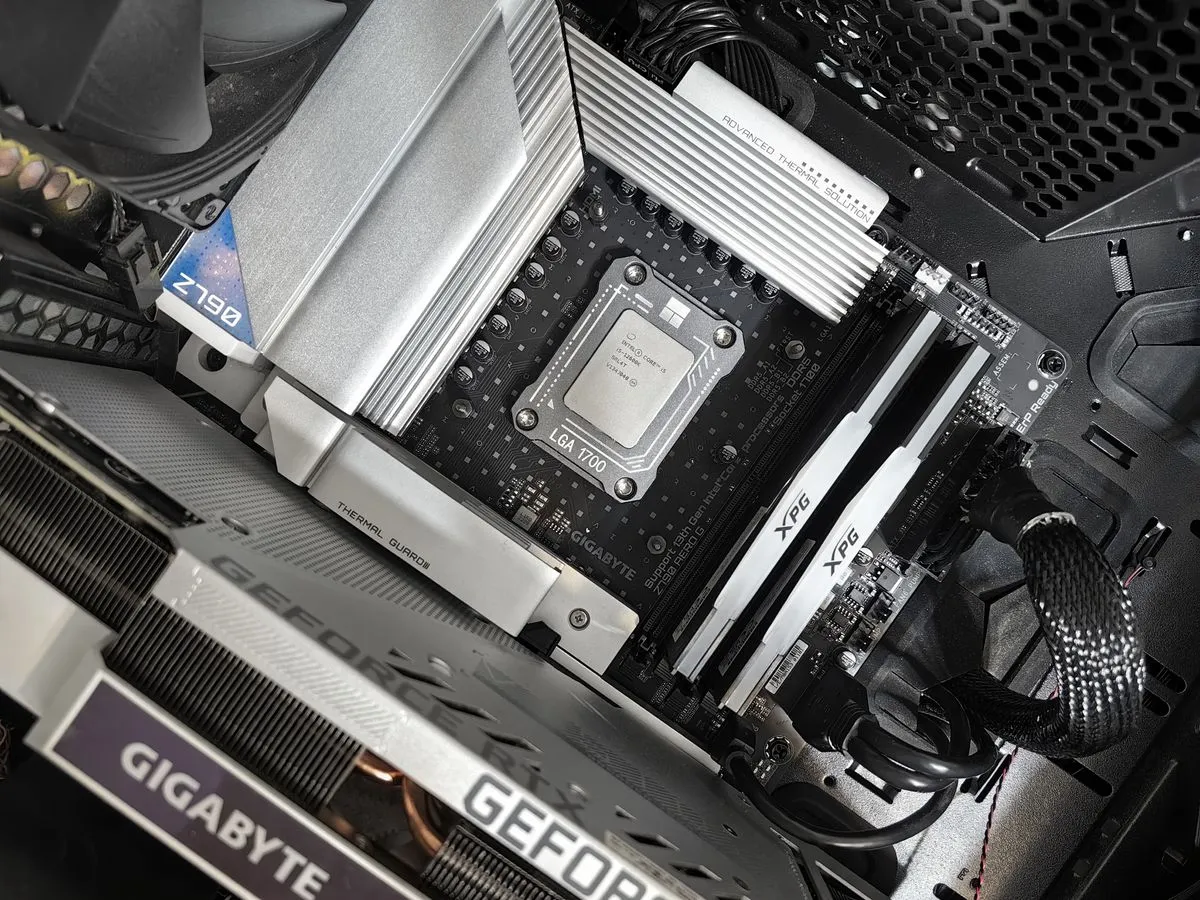
Three Years of Electricity on Top
The electricity figures use the usage assumptions in our gaming PC electricity cost guide and the US average residential rate of 18.31 cents per kWh (EIA, July 2026). They are estimates. Your hours of play, your state’s rate and your actual wattage will move them.
| Build | Assumed draw and hours | kWh a year | Cost a year | 3-year electricity | 3-year total with parts |
|---|---|---|---|---|---|
| 1080p | 250 W, 3 hours a day | 274 | $50 | $150 | $1,544 |
| 1440p | 450 W, 4 hours a day | 657 | $120 | $361 | $2,265 |
| 4K | 650 W, 5 hours a day | 1,186 | $217 | $652 | $3,640 |
All figures are our arithmetic, rounded to the dollar. The 4K build costs more than four times as much to run as the 1080p build, and over three years that gap is about $500. For your own numbers, plug a state rate and your weekly hours into our electric bill estimator.
Power Supply Sizing
NVIDIA’s spec pages give two figures that explain the 850 W supply in the 4K build. The RTX 5080 has a total graphics power of 360 W and a listed required system power of 850 W. The RTX 5060 Ti is rated 180 W with a 600 W system requirement, and the RTX 5070 and 5070 Ti list 650 W. We chose 750 W for the 1080p build and 850 W for the 1440p build as headroom of our own; we did not check AMD’s published requirements, so confirm the number for your exact card before buying.
A good Gold-rated unit is cheap: we saw a 750 W unit at $69.99 and 850 W units at $59.99 to $79.99. Skimping here is the worst place to save, since the supply feeds every other part.
Ways to Cut the Bill
- Buy the graphics card one tier lower. At 1440p the RX 9060 XT 16GB at $519.99 is $300 less than the RX 9070 XT. The tradeoff is lower frame rates, which we did not benchmark.
- Start with 16 GB of memory if you can. The 16 GB kit was $259.99, which is $200 under the 32 GB kit. Memory is cheaper to add later only if prices fall, and nobody can promise that.
- Use a combo deal. The 9600X with a B850M board was $314.99 together, against $194.99 for the CPU alone.
- Skip the extras. The case, cooler and SSD in our builds are $229 combined. A flashier trio is where builds creep past budget.
- Compare against a console. If you only play a few titles, our console cost of ownership guide shows what that route costs over time.
Bottom Line
Expect about $1,400 for a capable 1080p PC, about $1,900 for 1440p and about $3,000 for 4K in parts alone, plus $150 to $650 of electricity over three years. The graphics card decides the total, and memory is the part most worth watching, because TrendForce reports DDR5 at close to five times its price a year ago in Germany. If you need to build this year, price memory and the card together, and recheck listings the day you buy.
FAQ
How much does a gaming PC cost to build in 2026?
By our arithmetic from Newegg listings on October 6, 2026, parts cost about $1,394 for a 1080p build, $1,904 for 1440p and $2,989 for 4K. That excludes a monitor, Windows license, peripherals and tax. Prices shift daily, so treat the totals as a comparison rather than a quote.
Why is RAM so expensive right now?
TrendForce reported on August 17, 2026 that Germany’s DDR5 price index was nearly 4.9 times its level a year earlier, and that US 32 GB kits that sold for $100 to $200 in October 2025 now start near $350. Our laptop prices guide covers how IDC expects the memory squeeze to affect PC prices through 2027.
How much electricity does a gaming PC use?
Our estimates are 274 kWh a year for an entry rig at 250 W and 3 hours a day, 657 kWh for a mid-range rig, and 1,186 kWh for a flagship rig at 650 W and 5 hours a day. At 18.31 cents per kWh that is about $50, $120 and $217 a year. These are assumptions, so measure your own with a plug-in meter.
Is it cheaper to buy a prebuilt gaming PC?
We did not price prebuilt systems, so we cannot say. Compare any prebuilt to the part list above, and check the memory, power supply and SSD, since makers sometimes cut those first to hit a price.