
Running an AI model on your own computer costs about 5 to 12 cents an hour in electricity at the 18.31¢ per kWh US residential average (EIA, July 2026). The hardware is the larger number: a 16GB RTX 5060 Ti graphics card was $788.99 on Best Buy’s site on October 5, 2026, and a Mac mini starts at $899 on apple.com. Against a $20-a-month subscription, our arithmetic puts the break-even at roughly four to five years for one subscription, and about two years if you now pay for two. Here is the cost by hardware tier, what it adds to your power bill, and when local actually wins.
The Hardware Tiers
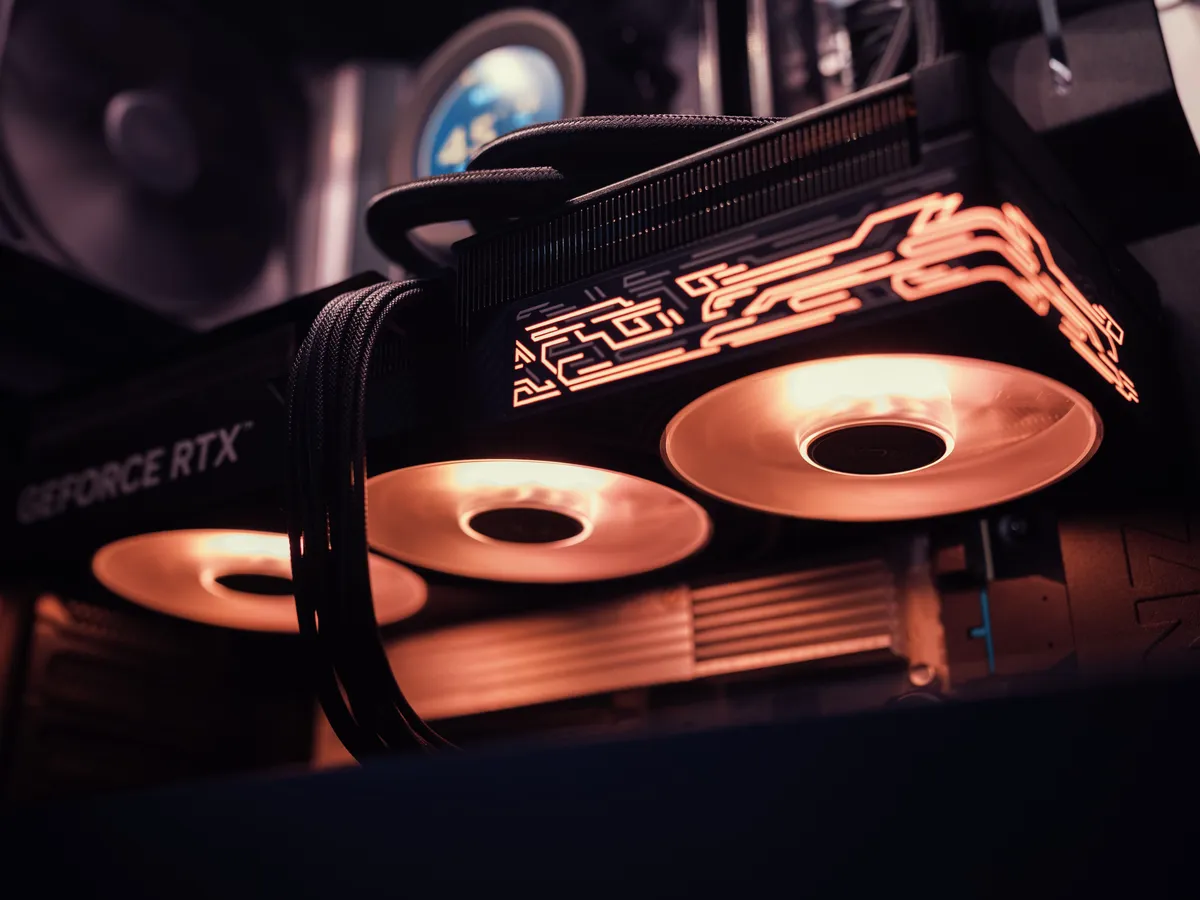
Local models live in fast memory, so the memory size sets the model size you can run. On a PC that means the graphics card’s own memory. On a Mac it means unified memory, which the chip and GPU share. The specs and prices below are from the pages named in each row, checked October 5, 2026.
| Tier | Memory | Price we saw | Max power |
|---|---|---|---|
| RTX 5060 Ti | 16GB GDDR7 | $788.99 (ASUS Prime, Best Buy) | 180 W (NVIDIA) |
| RTX 5070 Ti | 16GB GDDR7 | Not checked | 300 W (NVIDIA) |
| RTX 5090 | 32GB GDDR7 | Not checked | 575 W (NVIDIA) |
| Mac mini, M6 | Up to 32GB | From $899 (apple.com) | Not listed |
| Mac mini, M5 Pro | Up to 64GB | From $1,699 (apple.com) | Not listed |
The power column is NVIDIA’s total graphics power, a ceiling rather than a measurement of what inference draws. A graphics card also needs a computer around it, so the card prices above are not whole-machine prices. Apple’s pages for the Mac mini showed no wattage, and we did not find a memory-upgrade price for it, so the $899 and $1,699 figures are starting prices only.
What Fits in That Memory
Our rule of thumb, not a measured result: a model compressed to 4-bit needs roughly half a gigabyte per billion parameters, plus working room for the conversation. That puts an 8-billion-parameter model near 5GB, a 32-billion model near 20GB and a 70-billion model near 40GB. Real needs vary with the compression format and how long your prompts are.
By that estimate a 16GB card handles models up to the mid-teens of billions of parameters, a 32GB card reaches the 30-billion class, and a 70-billion model needs 48GB or more, which on this list means the 64GB Mac mini option. Models of this size are generally weaker than the largest hosted ones, which matters for the break-even below. See our AI subscription price guide for what the hosted plans cost.
The Electricity Math
The formula is kWh = watts × hours ÷ 1,000, and cost = kWh × $0.1831. For the PC rows we assume 100 W for everything except the graphics card, which is our estimate. For the Mac we use 35 W, the top of the 25 to 35 W range that the third-party site PromptQuorum lists for an M5 Max chip during inference. That is a different machine from a Mac mini, so treat it as a placeholder. A 4-hour-a-day schedule, our assumption, gives 120 hours a month and 1,460 a year.
| Setup | Draw | Per hour | Per month (4 h/day) | Per year (4 h/day) |
|---|---|---|---|---|
| PC with RTX 5060 Ti | 280 W | 5.1¢ | $6.15 | $74.85 |
| PC with RTX 5070 Ti | 400 W | 7.3¢ | $8.79 | $106.93 |
| PC with RTX 5090 | 675 W | 12.4¢ | $14.83 | $180.45 |
| Mac at 35 W | 35 W | 0.6¢ | $0.77 | $9.36 |
| PC left on, idle, 24/7 | 80 W | 1.5¢ | $10.55 | $128.32 |
All figures in this table are our arithmetic. The idle row uses the 80 W idle estimate from our gaming PC electricity guide. It shows that a machine left on around the clock can cost more than one that is only busy a few hours a day.
Where you live moves these numbers. The EIA’s July 2026 range runs from 13.12¢ per kWh in Utah to 48¢ in Hawaii. The 280 W setup at 4 hours a day, 33.6 kWh a month, would cost about $4.41 a month at the Utah rate and $16.13 at the Hawaii rate (our arithmetic). Use the electric bill estimator to plug in your own rate.
When Local Beats a Subscription
A $20 plan costs $240 a year, and two $20 plans cost $480. Subtract the yearly electricity from the above, and divide the hardware price by what is left. This is our arithmetic, and it assumes the local model fully replaces what you pay for now.
| Hardware | Price | Electricity per year | Break-even, one $20 plan | Break-even, two $20 plans |
|---|---|---|---|---|
| Mac mini M6 (35 W assumed) | $899 | $9.36 | 3.9 years | 1.9 years |
| RTX 5060 Ti card (280 W system) | $788.99 | $74.85 | 4.8 years | 1.9 years |
| RTX 5090 system (675 W) | Not priced | $180.45 | Savings only $59.55 a year | Not calculated |
For the 5090 row, savings of $59.55 a year (our arithmetic) mean the whole machine would have to cost under about $298 to pay back within five years. That is not realistic, so a 5090 build is a choice about capability and privacy rather than saving money on a subscription.
Two caveats change the answer more than the arithmetic does. First, the card row ignores the cost of the rest of the PC, which makes it look better than it is for a new build. If the card goes into a computer you already own, only the extra hours of draw count. Second, a model that fits in 16GB is not the same product as a hosted flagship model. If you still need the $20 plan for hard tasks, local hardware is an added cost, not a replacement.
When Local Makes Sense
- You already own the hardware. A gaming PC with a 16GB card costs nothing extra to buy, and a few dollars a month to run for light use.
- Privacy matters. Documents stay on your machine, which no subscription price can match.
- You hit usage limits. Heavy daily use is where a fixed hardware cost beats a recurring one.
- You can use the card twice. Our GPU rental guide covers renting idle cards out to offset the power bill.
Memory prices are also rising, which affects both PC parts and Macs; see our laptop price guide for the 2026 increases.
The Bottom Line
Electricity is the small part: about 5 to 12 cents an hour on a graphics-card PC and well under a cent on a low-power Mac, at 18.31¢ per kWh. The purchase decides the outcome. By our arithmetic, a $789 card or an $899 Mac mini takes about four to five years to pay back against one $20 plan, and about two years against two. Buy local hardware for privacy, tinkering or heavy use, not as a way to save on one subscription. We did not run these models ourselves, and real draw will differ from the maximums shown.
FAQ
How much electricity does a local LLM use?
It depends on the machine. NVIDIA lists 180 W for the RTX 5060 Ti and 575 W for the RTX 5090 as maximum graphics power. With about 100 W for the rest of a PC (our estimate), a 5060 Ti system is about 280 W, or 5.1¢ an hour at 18.31¢ per kWh.
Is running AI locally cheaper than ChatGPT?
Only after years of use. Our arithmetic shows about 3.9 years for a Mac mini against one $20 plan, assuming it fully replaces the plan. Against two plans it is about 1.9 years. Local models that fit in 16GB are also generally less capable than hosted ones.
How much memory do I need to run a local model?
Our rule of thumb is about half a gigabyte per billion parameters at 4-bit compression, plus room for context. That is about 5GB for an 8-billion model and about 40GB for a 70-billion model. Actual use varies by format and prompt length.
Is a Mac or an NVIDIA GPU cheaper to run?
On the numbers we have, a Mac. PromptQuorum lists 25 to 35 W during inference for an M5 Max chip, against NVIDIA’s 180 to 575 W graphics-power ceilings. The Mac mini’s own draw was not on Apple’s pages, so confirm it before you buy.